
There’s a quiet killer in your food, your makeup bag, your child’s favorite candy—and it’s wearing red.
We know it as Red 40 (also called Allura Red). A petroleum-derived synthetic dye that’s slipped into everything from yogurts to vitamins, birthday cakes to cough syrups. And for decades, it’s been linked to hyperactivity in children, allergic reactions, and growing concern about its carcinogenic potential.
But before Red 40 flooded the shelves, there was something ancient. Something sacred. Something that didn’t just color your food—it connected you to the earth.
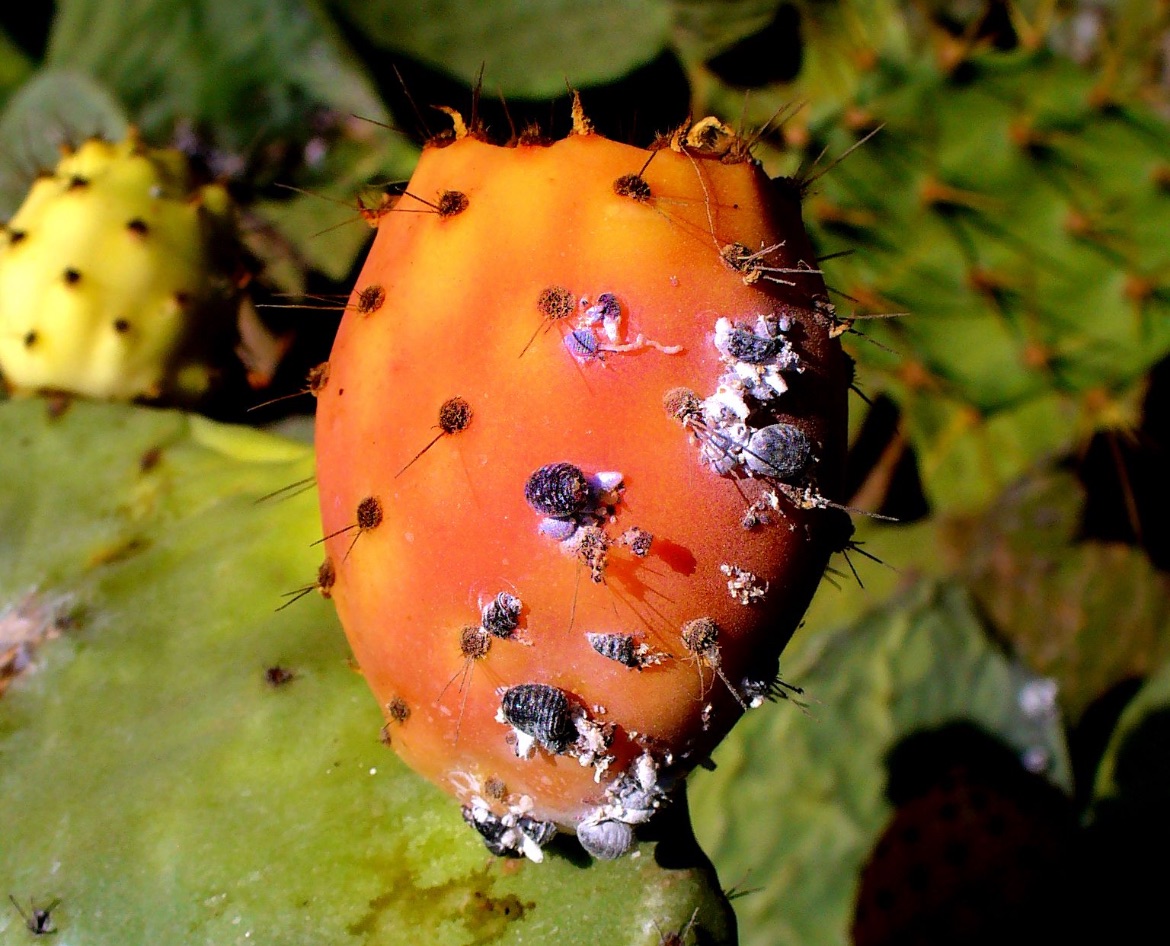
That something is the cochineal bug.
The Bug That Bled Beauty
Cochineal is a tiny insect, native to Mexico and Central America. When crushed, it produces a brilliant crimson pigment called carmine—used by Indigenous Mesoamerican peoples for thousands of years in textiles, food, face paint, and sacred rituals.
To the Aztecs and Maya, color was not decoration—it was declaration. Red was life, vitality, and spirit. Cochineal was harvested with care, passed down through matriarchal hands, and treated with reverence. This was not just a dye—it was medicine, art, and cosmology.
When Spanish colonizers arrived, they saw cochineal’s richness and value—and did what they always did. They extracted it, commodified it, and tried to erase the people who made it sacred.

Fast-Forward: The Rise of the Synthetic Era
The modern food industry had no use for sacred insects. It wanted profit and permanence. So Red 40 was born—cheap, chemical, and shelf-stable.
But here’s what they didn’t tell us:
• Red 40 is banned or restricted in Norway, Austria, and parts of the EU.
• Studies have shown links to hyperactivity, behavioral issues, and immune response.
• It’s made from coal tar or petroleum byproducts—not exactly something our ancestors would recognize as food.
Worse, it’s been marketed to children. Bright red snacks, juices, cereals, candies—targeted like bullets.
Once a staple in candies, cereals, and snacks, this vivid synthetic colorant is finally being recognized for what it is: a health hazard masquerading as food. For decades, scientists, parents, and holistic health advocates have raised the alarm about Red 3 and its cousin, Red 40, linking them to behavioral issues in children and carcinogenic effects in lab animals. Now, the tide is turning.

West Virginia has taken a bold stand, becoming the first state to ban Red Dye No. 3 along with five other artificial food dyes and preservatives. According to Food & Wine, this move was catalyzed by mounting research and public demand for transparency and health-conscious alternatives. It sets a precedent for others to follow—proof that grassroots pressure works when communities demand better from their lawmakers and food systems.
Meanwhile, EatingWell reports that multiple states are moving toward similar bans, and the conversation is spreading. More parents are waking up to the truth: the same food dyes banned in Europe are still served to American children.
And it’s not just about cancer. The Wall Street Journal revealed that over 10% of grocery store items contain artificial dyes, with Red 40 being the most common. This includes everyday products marketed directly to kids—from breakfast cereals to fruit snacks. The question is no longer “Do these dyes pose a risk?” but “Why are they still here?”
Even the Associated Press has weighed in, highlighting how Red Dye No. 3 has been banned in cosmetics for over 30 years yet remained legal in food until now (source). The inconsistency is both baffling and dangerous.
But the solution isn’t just removing these dyes. It’s reclaiming our food systems—restoring what was stolen from Indigenous diets and ancestral wellness traditions. Before synthetic additives took over, nature provided all the nourishment and color we ever needed. Natural red hues once came from beet juice, pomegranate, and even cochineal, a traditional dye derived from insects that dates back centuries. According to Knowable Magazine, modern science is revisiting these ancestral practices with new appreciation.
So Why Don’t We Go Back to the Real Thing?
Because the truth is inconvenient.
Natural dyes don’t last forever.
They require labor, respect, and knowledge passed down through generations.
But cochineal is having a quiet resurrection.
Conscious food producers and artists are turning back to ancestral dyes—some even using cochineal to create ritual clothing, spiritual art, and healing foods. This shift isn’t about nostalgia. It’s about survival.
When you choose natural dye over synthetic poison, you are:
• Protecting your body
• Honoring Indigenous technology
• Returning to a sacred relationship with the earth
What You Can Do
1. Check your labels – Look for “Red 40,” “Allura Red,” or “carmine.” Choose transparency over toxicity.
2. Support ancestral artistry – Purchase from artists who use plant-based or ethically sourced materials.
3. Educate your family – Especially children. Let them know the difference between color that heals and color that harms.
4. Reconnect with ancestral food knowledge – Livity isn’t just about what we eat. It’s about how we live.
This is the death of a dye.
But it could be the rebirth of something much deeper.
As a mother, as a woman, and as someone who’s walked through fire—I see through the narratives. I see what they’re doing to our children. And I refuse to stay silent.
Join me. Join us.
Visit LivityUnityAlliance.Online and download your free eBook: Reclaiming Our Power.
Because it’s time. Time to unlearn. Time to think. Time to rise.
References & Sources:
1. Feingold Association of the United States
• Research on artificial dyes and hyperactivity in children
2. Center for Science in the Public Interest (CSPI) – “Food Dyes: A Rainbow of Risks”
• CSPI report on the health risks associated with synthetic dyes like Red 40
• https://cspinet.org/resource/food-dyes-rainbow-risks
3. EFSA (European Food Safety Authority)
• EU safety evaluations on food dyes and restrictions on Red 40 (E129)
• https://www.efsa.europa.eu/en/efsajournal/pub/1331
4. National Library of Medicine
• Study: The role of food additives in ADHD: A systematic review
• https://pubmed.ncbi.nlm.nih.gov/25344680
5. Smithsonian Magazine – “The Bug That Had the World Seeing Red”
• Cultural and historical significance of cochineal in Indigenous Mesoamerican societies
• https://www.smithsonianmag.com/arts-culture/the-bug-that-had-the-world-seeing-red-114945712
6. Scientific American – “A Rainbow of Chemicals”
• Overview of synthetic dyes in American food supply
• https://www.scientificamerican.com/article/a-rainbow-of-chemicals
7. Natural Dyes and Textiles – UCLA Latin American Institute
• Indigenous use of cochineal for traditional clothing and spiritual practices
• https://www.international.ucla.edu/lai/article/213590
8. https://www.eatingwell.com/food-dyes-getting-banned-11704001
9. https://www.wsj.com/business/artificial-food-dyes-database-fcf34296
10. https://apnews.com/article/synthetic-dyes-red-3-artificial-colors-ef5af10b3aca66d0033d3f239546f1aa
11. https://knowablemagazine.org/content/article/technology/2022/cochineal-red-dye-bugs-moves-lab
12. https://time.com/archive/6878601/regulation-death-of-a-dye/
