
Introduction: Echoes from the Bay of Bengal
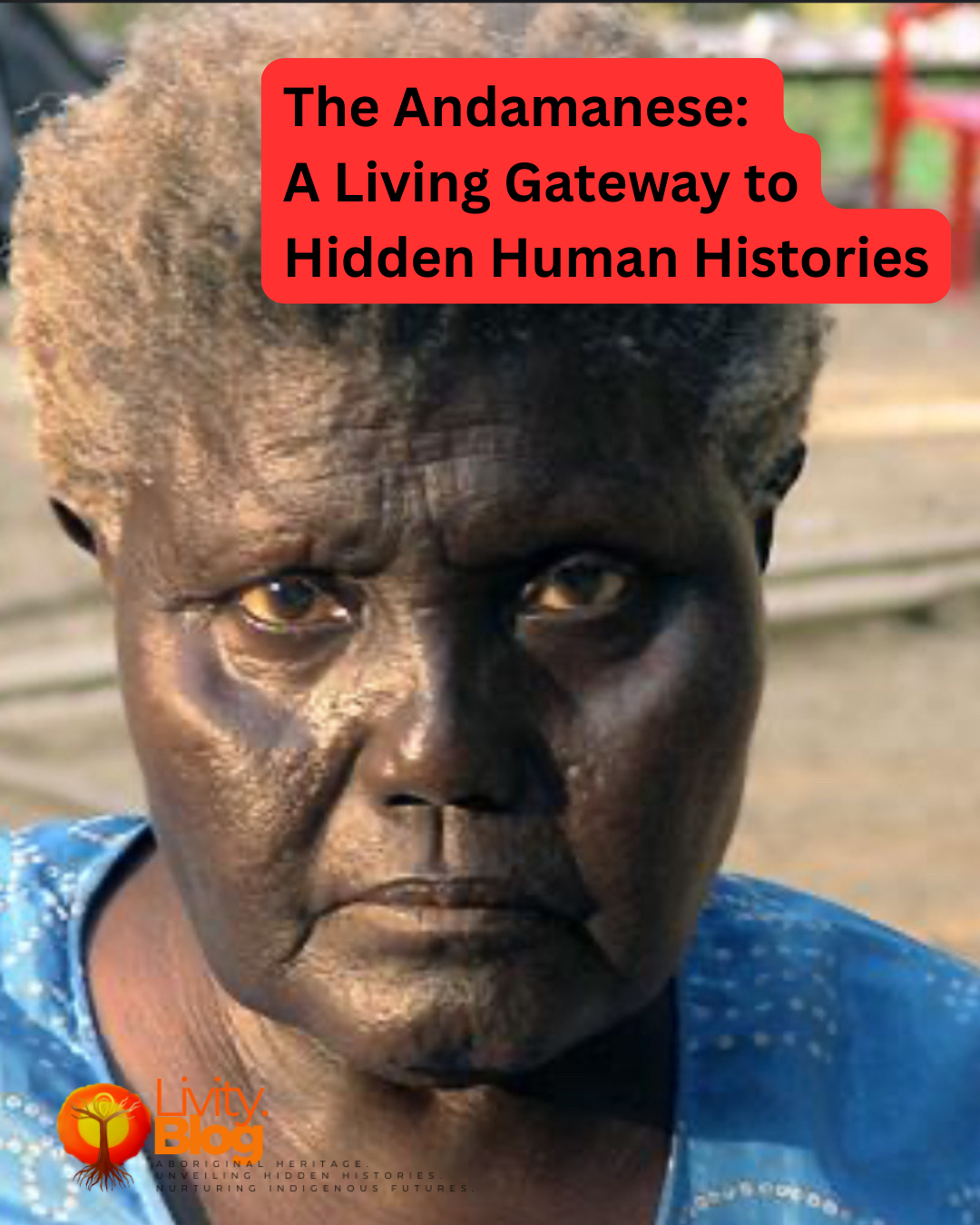
Nestled in the heart of the Bay of Bengal, the Andaman Islands are home to one of humanity’s most fascinating and enigmatic populations: the Andamanese. Long overlooked or misrepresented, these Indigenous peoples have captured the attention of scientists and historians for their profound genetic legacy, unparalleled isolation, and rich oral traditions. Often framed as relics from humanity’s distant past, the Andamanese are increasingly being understood as living witnesses to multiple waves of human migration—and as custodians of a much more complex story than once imagined.
The Andamanese are not merely a genetic curiosity; they are vibrant communities whose existence challenges many of our assumptions about human evolution. Their unique position on the human family tree sheds light not only on ancient migration patterns but also on how deeply interconnected, diverse, and regionally evolved early human societies truly were. Understanding their story allows us to rewrite ours.

Rethinking the “Out-of-Africa” Model
For decades, the dominant narrative in anthropology held that modern humans originated in Africa and left in a single, sweeping migration around 70,000 years ago. This “Out-of-Africa” theory explained the spread of Homo sapiens across the globe in simple, linear terms. But recent research has challenged this neat trajectory, revealing a far more complex, multi-directional movement of peoples, shaped by both migration and localized evolution.
Emerging studies suggest that human ancestors may have exited Africa in smaller, earlier waves—some as far back as 120,000 years ago—only to be genetically absorbed or outcompeted by later migrations. At the same time, genetic diversity within Africa itself indicates a mosaic of human lineages evolving independently before eventually merging. This fluid and dynamic view of human origins underscores the need to move beyond singular narratives and embrace a model that includes overlapping migrations, regional adaptations, and persistent lineages.
In this broader context, the Andamanese play a pivotal role. Once thought to be a fossilized remnant of the first migration, they are now seen as participants in a more nuanced, multibranched human journey.
The Genetic Legacy of the Andamanese
One of the most striking revelations of modern genetics is the placement of the Andamanese within a deep-rooted Asian lineage. Far from being “primitive” or directly descended from African populations, the Andamanese are closely related to a unique branch of East Eurasian ancestry. This lineage split from what would become modern East Asians somewhere between 50,000 and 25,000 BCE—indicating a long and independent evolutionary path on the Indian Ocean frontier.
Earlier anthropological categorizations grouped the Andamanese with other dark-skinned, small-bodied forest dwellers from Southeast Asia and the Pacific under the broad and now-discredited label “Negrito.” This term was based on superficial physical traits and has since been replaced with a more precise understanding: these features likely arose through evolutionary convergence. In other words, similar environmental pressures—such as tropical forest habitats and foraging lifestyles—produced similar physical adaptations across unrelated groups.
This revised understanding moves beyond appearance and focuses on deep genomic data. The Andamanese are not vestiges of ancient Africans; they are genetically distinct, part of a wide and complex web of human evolution in Asia. Their story reveals how early humans didn’t just spread outward in one direction, but settled, split, and diversified in many regions—sometimes leaving behind lineages that continue, in living form, today.

Uncovering Forgotten Threads of Global Migration
Beyond Asia, an even more unexpected story has begun to surface. Recent genomic analyses of some Indigenous South American tribes—particularly the Suruí, Karitiana, and Xavante—revealed faint but consistent signals of Australasian ancestry. These traces are similar to genetic markers found in the Andamanese, Papuans, and Aboriginal Australians. Though the percentages are small, they are statistically significant and suggest the presence of an ancient migration branch that once stretched from Southeast Asia into the Americas.
One theory posits that early Australasian-related peoples migrated north into what is now China and then crossed Beringia, the land bridge that once connected Siberia and Alaska. Over millennia, their genes were diluted by successive waves of migrants from Northeast Asia, but small fragments persisted—especially in South America, far from their original home.
These findings hint at a prehistoric migration route that defies the conventional “Siberian corridor” explanation of how humans reached the Americas. They paint a picture of deep-time human movements that carried ancient Asian DNA, including genes found in the Andamanese, across the Pacific world.

Connecting Asia, Oceania, and the Americas
The concept of a single migratory wave into the Americas is rapidly being replaced by a more dynamic, multi-branch model. Beringia was not just a passageway but a corridor of cultural and genetic interaction, with multiple waves of peoples moving in both directions over thousands of years.
In this web of movement, Andamanese-related lineages appear to be part of a much broader Australasian–Asian–American arc. While there’s no direct proof that the Andamanese themselves made this journey, their genetic cousins may have played a key role in shaping the earliest populations of the Americas. These populations eventually gave rise to the diverse Native American societies known today.
Interestingly, mitochondrial haplogroup X2a—found among Native North American groups such as the Algonquian and Sioux—adds another layer to this narrative. X2a is believed to have originated in Central Asia, not East Asia, further suggesting that the peopling of the Americas involved complex ancestral streams, some of which may be linked, albeit distantly, to the same genetic continuum that includes the Andamanese.
Implications for Human Evolution and Anthropology
The shifting role of the Andamanese in the global human story forces us to re-evaluate many long-held assumptions. Traditional anthropological models emphasized simple, one-way migrations; new models speak of cycles, interruptions, extinctions, and survivals. The Andamanese embody these complexities—they are not static artifacts but dynamic populations who have survived millennia of isolation, adaptation, and cultural evolution.

Their existence challenges simplistic ideas of progress and linear development. They remind us that so-called “primitive” peoples are often highly specialized and adapted to their environments. More importantly, they reveal the need for anthropology to engage with living communities—not merely study them as remnants of the past.
Protecting a Living Legacy: The Andamanese Today
Despite their global significance, the Andamanese face serious existential threats. Colonial contact brought disease, exploitation, and displacement. In the modern era, road construction, forced assimilation, and unrestricted tourism have further eroded their land rights and cultural autonomy.
Alcohol, introduced by settlers, has devastated some groups. Language extinction looms for many Andamanese communities, especially as younger generations are drawn into the dominant culture. While Indian law provides some protections, enforcement is patchy, and many policies still reflect a paternalistic view rather than one of true partnership and empowerment.
Preserving the Andamanese isn’t just about protecting an endangered population—it’s about safeguarding one of humanity’s few remaining living links to our deepest origins.
The Ethical Imperative: Listening to Living History
The Andamanese are not silent observers—they are storytellers, guardians of knowledge, and holders of ancestral memory. As debates around ancient migration and genetics intensify, their voices are more essential than ever. Yet their ability to tell their own stories depends on whether we respect their right to self-determination.
Ethical engagement requires us to shift from extraction to collaboration. Rather than mining their past for academic prestige, we must co-create futures in which the Andamanese thrive on their own terms. This means supporting language preservation, healthcare access, legal rights, and sustainable development rooted in their cultural values.
Conclusion: What the Andamanese Teach Us About Ourselves
The Andamanese are not relics; they are revelations. Their continued presence defies the myth of linear human progress and points instead to a richer, more intricate past—one shaped by waves, webs, and whispers across continents. They remind us that human history isn’t a single thread, but a tapestry of migrations, adaptations, and stories written in bodies, languages, and landscapes.
Honoring their legacy means acknowledging the fragility of cultural memory and the urgency of protection. It means replacing outdated stereotypes with nuanced understanding—and ensuring that these narrators of ancient history have the future they deserve.
Their story is not just theirs—it’s ours. And it’s far from over.
✨ Join the movement to uncover what colonization tried to erase.
Join us on Livity.blog to rediscover the wisdom of Aboriginal heritage, unveil hidden histories, and empower Indigenous futures. Together, let’s honor the past to inspire a brighter tomorrow.
🌿
Rooted in ancestral truth, unveiling hidden legacies, and nurturing the spirit of Indigenous resilience.
Livity.Blog | Hidden Histories. Ancestral Intelligence.
🔎 References
Reich, D. et al. (2011). Reconstructing Indian population history. Nature, 461, 489–494. https://doi.org/10.1038/nature08365 ▶️ A foundational study detailing ancient admixture events, including insights into the Onge and Great Andamanese.
Skoglund, P. et al. (2015). Genetic evidence for two founding populations of the Americas. Nature, 525, 104–108. https://doi.org/10.1038/nature14895 ▶️ Key paper identifying Australasian ancestry in Amazonian tribes like the Suruí and Karitiana.
Mondal, M. et al. (2016). Genomic analysis of Andamanese provides insights into ancient human migration. Nature Genetics, 48, 1066–1070. https://doi.org/10.1038/ng.3621 ▶️ A landmark genome study showing the Andamanese split from other Asians tens of thousands of years ago.
Raghavan, M. et al. (2015). Genomic evidence for the Pleistocene and recent population history of Native Americans. Science, 349, aab3884. https://doi.org/10.1126/science.aab3884 ▶️ Offers genetic timelines for migrations into the Americas via Beringia.
Thangaraj, K. et al. (2003). Genetic affinities of the Andaman Islanders, a vanishing human population. Current Biology, 13, 86–93. https://doi.org/10.1016/S0960-9822(02)00677-2 ▶️ Early study on the distinct genetics of the Andamanese compared to surrounding populations.
Lipson, M. & Reich, D. (2017). A working model of the deep relationships of diverse modern human genetic lineages outside Africa. Cell, 168, 867–870. https://doi.org/10.1016/j.cell.2017.02.025 ▶️ Explores relationships between early Asian and Australasian populations.
Mallick, S. et al. (2016). The Simons Genome Diversity Project: 300 genomes from 142 diverse populations. Nature, 538, 201–206. https://doi.org/10.1038/nature18964 ▶️ High-resolution genomic dataset that includes the Onge of the Andamans.
Mitochondrial Haplogroup X2a Resources → National Center for Biotechnology Information (NCBI): https://www.ncbi.nlm.nih.gov/pmc/articles/PMC3110572/ ▶️ Discusses origins of Haplogroup X2a in Native Americans. BBC Future (2021).
The hidden story of humanity’s earliest migrations. https://www.bbc.com/future/article/20210401-the-hidden-story-of-humanitys-earliest-migrations ▶️ A readable summary of emerging models challenging the traditional Out-of-Africa theory.
UNESCO (2023). Indigenous Peoples of the Andaman and Nicobar Islands: Cultural Preservation and Threats. https://unesdoc.unesco.org ▶️ Provides context on the cultural, linguistic, and political challenges facing the Andamanese today.
