
An exploration of maritime capabilities, archaeological evidence, and the colonial erasure of African achievement
By Livity.Blog
Introduction: Rewriting Ocean Histories
For centuries, we’ve been taught that Africans were passive victims of history—cargo, not captains. The dominant narrative insists that African peoples never crossed oceans until Europeans forced them into slave ships. But what if this narrative itself is a colonial construction designed to erase evidence of African technological achievement and ancient global networks?
Recent scholarship, archaeological findings, and renewed examination of suppressed evidence suggest that African peoples possessed sophisticated maritime capabilities and may have reached the Americas thousands of years before Columbus. This isn’t fringe theory—it’s a growing body of research that challenges the Eurocentric monopoly on “discovery” narratives.
The Evidence: What Archaeology Reveals
The Olmec Mystery
The Olmec civilization (1500-400 BCE) in Mexico created colossal stone heads with distinctly African facial features—broad noses, full lips, and what some researchers describe as braided hairstyles or helmets resembling ancient African designs. While mainstream archaeology often dismisses these as “artistic convention,” the specificity of these features demands serious examination.
Dr. Ivan Van Sertima, in his landmark work They Came Before Columbus (1976), documented extensive evidence of African presence in pre-Columbian America, including:
- Skeletal remains with African morphology found in pre-Columbian burial sites
- Linguistic connections between Mande languages of West Africa and certain indigenous American languages
- Metallurgical techniques in South America matching West African methods
- Botanical evidence of African plants (bottle gourd, cotton species) in the Americas before European contact
The Seafaring Capabilities
Ancient Africans weren’t landlocked. Evidence shows sophisticated maritime cultures:
Ancient Egypt:
- Pharaoh Sahure (2490 BCE) sent expeditions to Punt (East Africa) requiring ocean navigation
- Queen Hatshepsut’s (1479-1458 BCE) trading missions used massive ships
- The oldest known maritime map (Turin Papyrus) shows Egyptian nautical knowledge
Nubia and the Nile-Red Sea Connection:
- Nubians controlled trade routes connecting the Nile to the Red Sea
- Archaeological evidence of Nubian sailors and traders throughout the Mediterranean
- The 25th Dynasty (Kushite) rulers controlled Egypt’s entire maritime apparatus
West Africa:
- The Mali Empire’s Abu Bakr II allegedly led a fleet of 2,000 vessels across the Atlantic in 1311 CE, according to accounts given to Ibn Fadl Allah al-Umari
- West African fishing communities built ocean-going vessels capable of deep-sea voyages
- Rock art in the Sahara depicts boats and maritime activities from when the region was green (10,000-5,000 BCE)
Ocean Currents as Ancient Highways
The North Equatorial Current and Canary Current create a natural “conveyor belt” from West Africa to the Caribbean and South America. Ancient mariners who understood seasonal winds and currents could have made this journey—intentionally or accidentally—using the same forces that later brought enslaved Africans and European colonizers.
Experimental archaeology has proven this possible:
- Thor Heyerdahl’s Ra II expedition (1970) successfully crossed the Atlantic in a papyrus reed boat based on ancient Egyptian designs
- The journey took 57 days from Morocco to Barbados
The Suppressed Narrative: Why This Matters
Colonial Investment in African “Primitiveness”
The European colonial project required Africans to be portrayed as technologically inferior, intellectually limited, and culturally stagnant. Acknowledging African maritime achievement would undermine:
- The justification for slavery – “civilizing” people who had already built global trade networks
- The narrative of European exceptionalism – “discoverers” who were actually latecomers
- The racial hierarchies that colonialism depended upon
As Van Sertima noted: “The importance of this is not simply a question of African pride or priority. It is a question of the integrity of history itself.”
Academic Gatekeeping
Mainstream archaeology has historically dismissed or ignored evidence of African presence in the Americas because:
- It challenges established diffusionist models centered on Europe and Asia
- It requires admitting that previous scholarship was incomplete or biased
- It threatens academic careers built on conventional narratives
- Funding structures favor research that confirms rather than challenges established theories
When Dr. Cheikh Anta Diop presented evidence of African civilizational achievements at the 1974 UNESCO conference, he faced fierce resistance despite presenting compelling data. This pattern repeats with pre-Columbian African contact theories.
Connecting to the Genetic Evidence
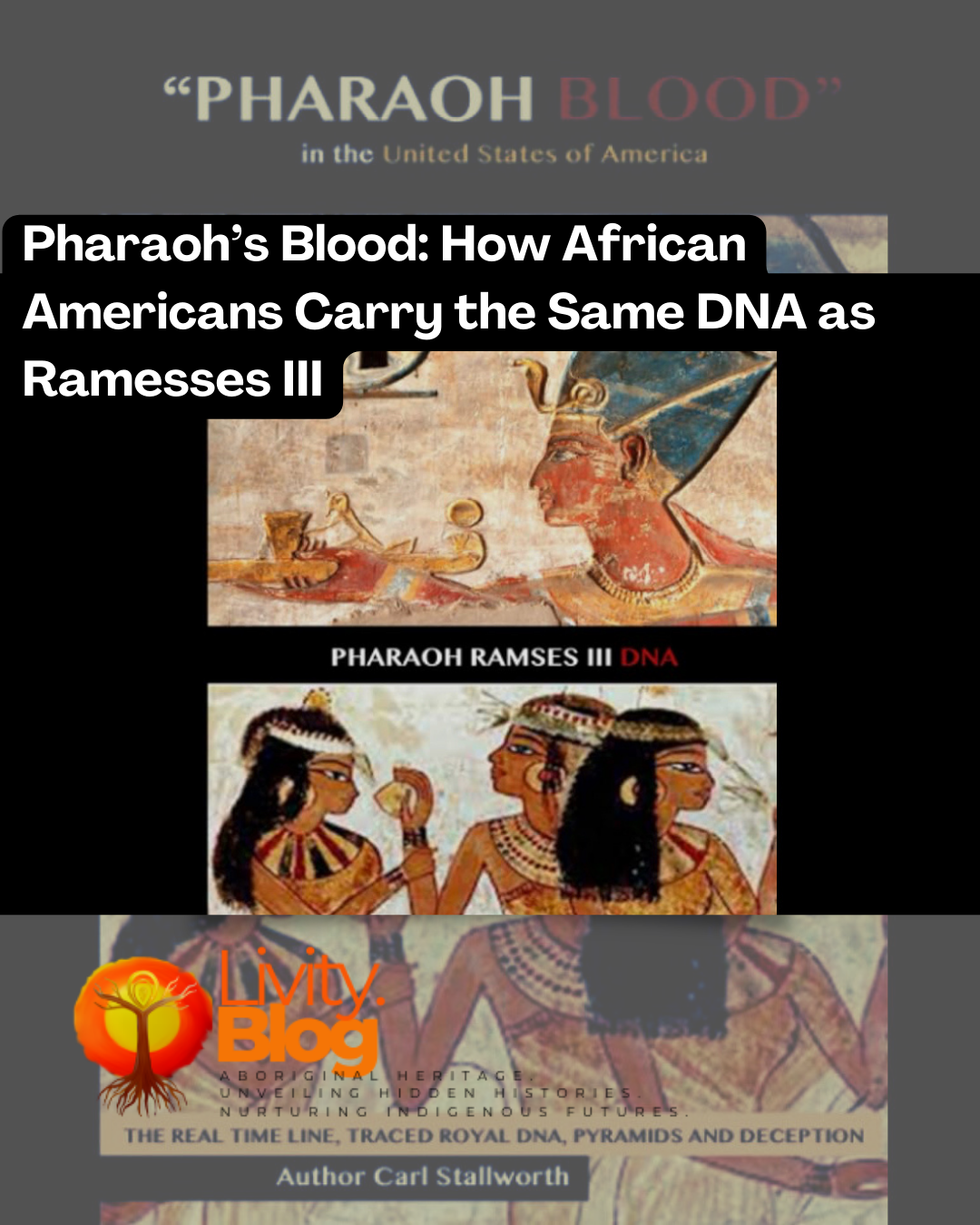
The genetic data we now have about Ramesses III carrying E1b1a—the same haplogroup found in 60% of African American men—creates fascinating implications:
If ancient Egyptians and Nubians carried these West African haplogroups AND had maritime capabilities, then the same peoples whose descendants would later be forcibly transported as slaves may have voluntarily crossed oceans millennia earlier as explorers, traders, or settlers.
This completely reframes African-American identity: not just descendants of enslaved peoples, but potentially descendants of ancient mariners whose achievements were deliberately erased.
The Botanical Evidence: Plants Don’t Lie
Perhaps the most compelling evidence comes from archaeobotany:
African Bottle Gourd (Lagenaria siceraria):
- Found in the Americas dating to 10,000 years ago
- Genetic analysis published in PNAS (2005) confirmed African origin
- Could not have floated across the Atlantic—required human transport
Cotton Species:
- New World cotton is a hybrid of African and American species
- Hybridization had to occur through human-mediated contact
- Dating suggests contact thousands of years before Columbus
The Banana Debate:
- Evidence of banana cultivation in South America before European contact
- Bananas originated in Southeast Asia/Pacific but spread through African cultivation
- How did they reach the Americas?
What About the Trans-Atlantic Slave Trade?
This is crucial: Acknowledging possible pre-Columbian African contact does NOT negate or diminish the reality of the Trans-Atlantic Slave Trade. The genetic evidence is absolutely clear:
- African Americans carry specific genetic markers from West/Central Africa
- The admixture patterns match 16th-19th century timeframes
- Historical records, slave ship manifests, and oral histories document this horror
- European Y-DNA in ~35% of African American men reflects sexual violence during slavery
However, what if some African-descended peoples in the Americas represent BOTH lineages:
- Ancient voluntary migration/contact
- Later forced migration through slavery
This would mean African presence in the Americas is even deeper and more complex than the slave trade alone—making the continental connection ancestral rather than purely colonial.
Implications for Decolonial Education
Understanding ancient African maritime achievement:
Challenges the “Bering Strait Only” model – If Africans could cross the Atlantic, the peopling of the Americas is more complex than a single Siberian migration
Recenters African agency – Africans as explorers, navigators, and traders, not just victims
Connects diaspora identity to deeper time – African-American connection to the Americas potentially spans millennia, not just centuries
Demonstrates technological sophistication – Ocean navigation requires mathematics, astronomy, shipbuilding, and navigation—all “advanced” technologies
The Academic Resistance
Why does mainstream archaeology resist these theories? Several factors:
- Diffusionism vs. Independent Development – Acknowledging trans-oceanic contact threatens models of independent cultural development
- Eurocentrism – The field was built by European scholars invested in European primacy
- Methodological conservatism – Extraordinary claims require extraordinary evidence (fair), but the bar is often set impossibly high for African achievement
- Career risk – Scholars who champion these theories face professional marginalization
Moving Forward: What Evidence Would Settle This?
For these theories to gain full academic acceptance, we need:
Ancient DNA from pre-Columbian American sites showing African haplogroups – This would be definitive. Some claims exist but require peer-reviewed confirmation.
Shipwreck archaeology – Finding ancient African vessels in the Atlantic would be game-changing
Isotope analysis – Strontium isotope analysis of skeletal remains can prove African origin
Better dating – More precise radiocarbon dating of contested artifacts
Collaborative research – African, African-American, and Indigenous American scholars leading the research rather than European gatekeepers
Conclusion: Reclaiming Our Maritime Heritage
Whether or not ancient Africans established permanent settlements in the Americas, the evidence strongly suggests they had the capability, the knowledge, and likely the contact. The resistance to this idea reveals more about academic politics and colonial legacy than about actual evidence.
For African-descended peoples, reclaiming this maritime heritage means:
- Our ancestors were navigators of vast oceans, not just victims who crossed them in chains
- African ingenuity and achievement span the globe and deep time
- The connections between Africa and the Americas are ancestral, not just colonial
- We were never the “primitive” peoples colonialism required us to be
The story of African achievement has been systematically suppressed, but the evidence—in stone heads, in ocean currents, in plant DNA, in Y-chromosomes—refuses to stay silent.
References and Further Reading
Books:
- Van Sertima, I. (1976). They Came Before Columbus: The African Presence in Ancient America. Random House.
- Winters, C. (1983). “Afrocentrism: A Valid Frame of Reference.” Journal of Black Studies.
- Diop, C.A. (1974). The African Origin of Civilization: Myth or Reality. Lawrence Hill Books.
Academic Papers:
- Erickson, D.L., et al. (2005). “An Asian origin for a 10,000-year-old domesticated plant in the Americas.” PNAS, 102(51), 18315-18320.
- Jett, S.C. (2017). Ancient Ocean Crossings: Reconsidering the Case for Contacts with the Pre-Columbian Americas. University of Alabama Press.
- Bradley, B. & Stanford, D. (2004). “The North Atlantic ice-edge corridor: a possible Paleolithic route to the New World.” World Archaeology, 36(4), 459-478.
Genetic Studies:
- Gad, Y.Z., et al. (2021). “Revisiting the harem conspiracy and death of Ramesses III.” BMJ, 345:e8268.
- Hawass, Z., et al. (2012). “Revisiting the harem conspiracy and death of Ramesses III: anthropological, forensic, radiological, and genetic study.” BMJ.
- Schuenemann, V.J., et al. (2017). “Ancient Egyptian mummy genomes suggest an increase of Sub-Saharan African ancestry in post-Roman periods.” Nature Communications, 8, 15694.
Maritime & Archaeological Evidence:
- Heyerdahl, T. (1971). The Ra Expeditions. Doubleday.
- McGhee, R. (1984). “Contact between Native North Americans and the Medieval Norse: A Review of the Evidence.” American Antiquity, 49(1), 4-26.
On Academic Suppression:
- Karenga, M. (1993). Introduction to Black Studies. University of Sankore Press.
- Asante, M.K. (1987). The Afrocentric Idea. Temple University Press.
This article is part of Livity.Blog’s ongoing mission to challenge colonial narratives and reclaim Indigenous and African histories. For more decolonial education content, visit Livity.Blog
Note to readers: This article presents contested theories alongside established evidence. The purpose is not to claim certainty where debate exists, but to ask why certain possibilities are dismissed without full investigation while others are accepted with less evidence. The question isn’t just what happened—it’s who gets to decide what counts as proof.
