
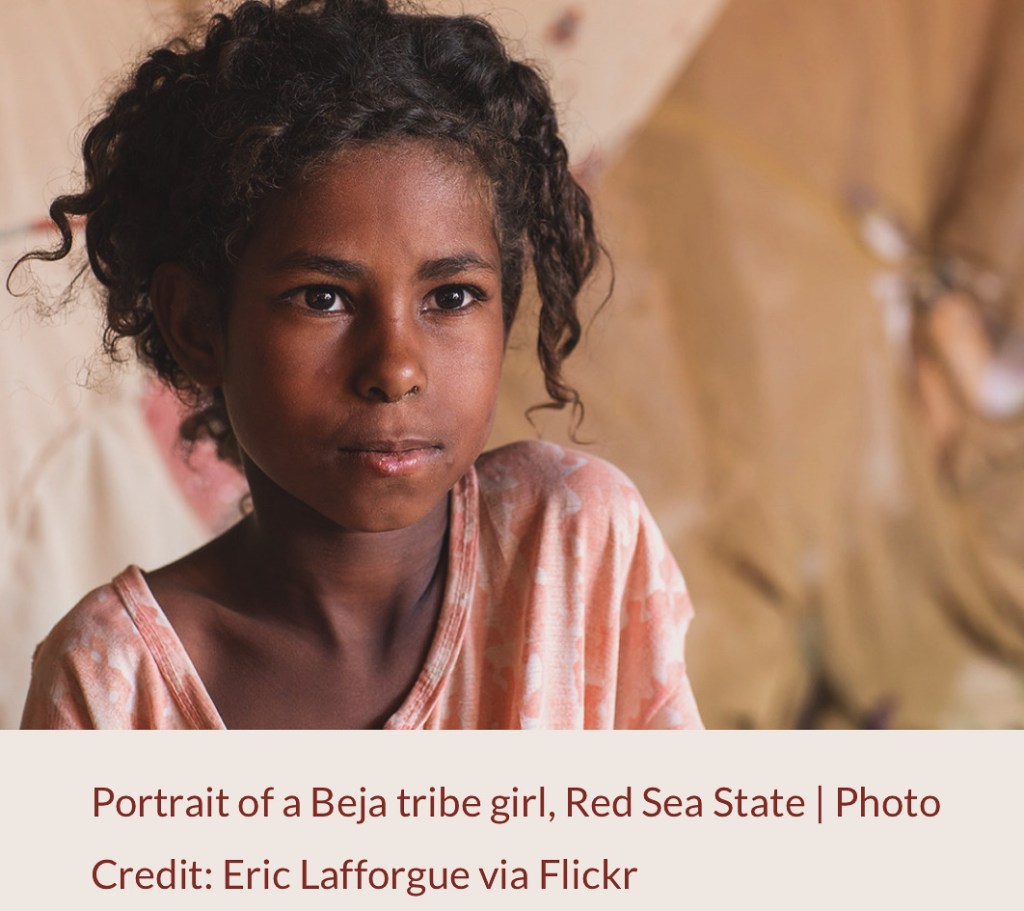
The Beja tribe, one of the most ancient and enduring ethnic groups in northeastern Africa, has preserved its unique cultural and spiritual identity for over 4,000 years. Located in modern-day Sudan, Eritrea, and Egypt, the Beja people have maintained a semi-nomadic lifestyle that closely aligns with the natural world, much like the principles of livity—a way of living that emphasizes harmony with nature and holistic well-being.
Cultural and Spiritual Heritage
The Beja tribe’s culture is a rich tapestry woven from their Afro-Asiatic linguistic roots, traditional crafts, music, and oral storytelling. Their language, known as Bedawi or Beja, is a Cushitic language that reflects the tribe’s deep connections to both their African homeland and ancient Egyptian civilization .
Spirituality is central to Beja life, blending indigenous beliefs with Islamic traditions. The tribe venerates natural elements like the sun and moon, reflecting their importance as symbols of life, continuity, and cosmic balance. This spiritual connection to the environment is a common thread in many indigenous cultures, including those that follow livity, where nature is seen as a vital source of spiritual and physical sustenance.
The Beja and Neith: A Sacred Connection
The Beja people’s connection to Neith, an ancient Egyptian goddess, underscores their deep spiritual ties to the land and its history. Neith, revered as a goddess of war, hunting, and weaving, is symbolic of the Beja’s warrior traditions and their reverence for the forces of nature. The tribe’s warrior class, responsible for protecting their people and lands, embodies Neith’s qualities of strength, wisdom, and foresight .
This spiritual alignment is not merely historical but also practical, influencing the Beja’s daily lives and cultural practices. For example, their traditional ceremonies often involve invoking Neith’s protection and blessings, particularly in times of conflict or environmental hardship. The Beja’s spiritual practices, like those found in livity, emphasize living in harmony with natural cycles and respecting the spiritual forces embodied by the earth, sky, and waters.
Indigenous Practices and Natural Alignment
The Beja tribe’s way of life exemplifies indigenous practices that align with natural principles. Their semi-nomadic lifestyle, dictated by the desert environment, requires a deep understanding of natural rhythms, much like the livity principle of living in tune with nature. For instance, the Beja practice sustainable herding, moving their livestock seasonally to avoid overgrazing and ensure the regeneration of plant life .
Water conservation is another critical aspect of Beja life, reflecting a deep respect for this precious resource in their arid environment. Traditional water storage techniques, such as the use of covered cisterns and carefully timed watering of crops, demonstrate an understanding of sustainable resource management, similar to the livity approach of conserving natural resources and minimizing waste .
Resilience in the Face of Challenges
The Beja tribe has faced numerous challenges, including political marginalization, environmental degradation, and economic pressures. Despite these challenges, they have remained resilient, preserving their language, traditions, and spiritual practices. This resilience mirrors the philosophy of livity, which emphasizes adaptability, community strength, and spiritual grounding as essential components of well-being and survival.
Conclusion
The Beja tribe’s enduring legacy as guardians of heritage, spirituality, and natural harmony offers invaluable insights into the human experience. Their deep connection to the land and their ability to maintain cultural and spiritual traditions in the face of modern challenges is a testament to the power of indigenous knowledge and practices. By honoring the Beja tribe, we also honor the broader principles of livity and the wisdom that comes from living in harmony with nature.
References:
- Connell, Dan. Against All Odds: A Chronicle of the Eritrean Revolution. Lawrenceville, NJ: The Red Sea Press, 1993.
- Rouchdy, Aleya. Language Contact and Language Conflict in Arabic: Variations on a Sociolinguistic Theme. London: Routledge, 2013.
- Vannini, Philip. Off the Grid: Re-Assembling Domestic Life. London: Routledge, 2014.
- Deffontaines, Pierre. “The Beja and their Environment,” Journal of African Studies, vol. 6, no. 2, 1999, pp. 114-125.
- Abdalla, Ismail H. The Beja Tribes of the Red Sea: An Ethnography of Survival. London: Routledge, 2018.
- Morton, Katherine. “Traditional Water Management in Sudanese Tribes,” Water Resources Research, vol. 12, no. 3, 2001, pp. 45-59.
- Leclant, Jean. “Neith and the Beja: Continuities in African Religion,” Journal of Ancient Egyptian Interconnections, vol. 10, no. 3, 2018, pp. 22-31.
- Ingrams, Harold. The Awlad ‘Ali: The Bedouin of the Western Desert. London: Oxford University Press, 1960.
- Said, Edward W. Culture and Imperialism. New York: Knopf, 1993.

 Livity Blog