
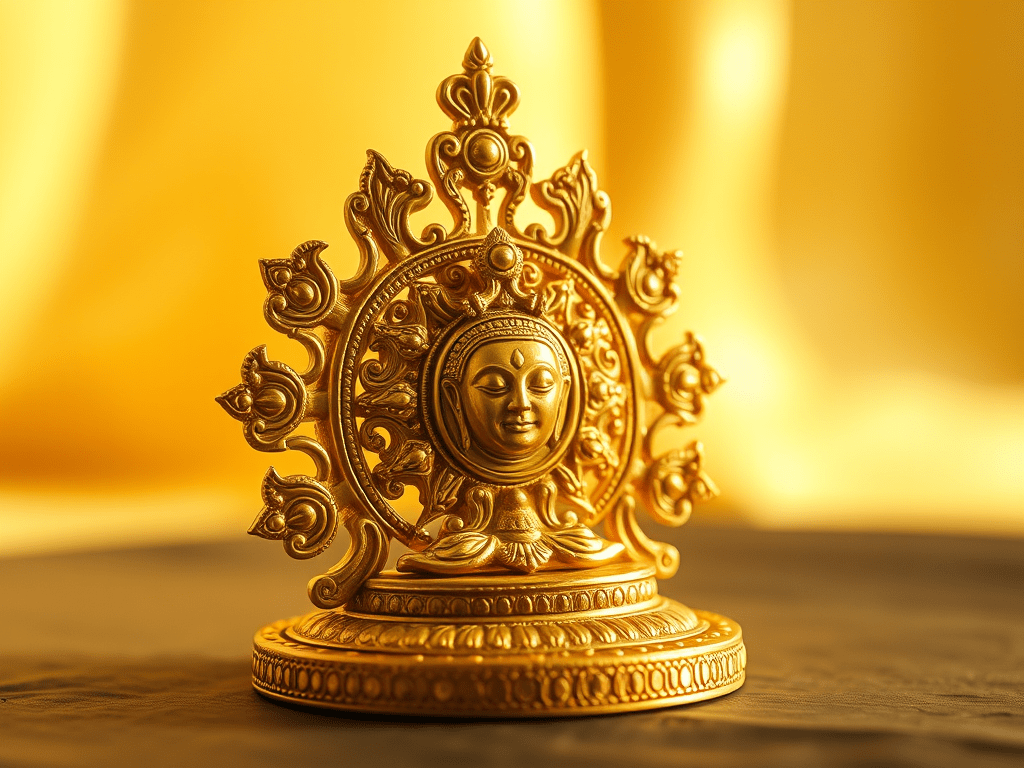
Gold has captivated humanity for millennia, shining as a symbol of wealth, power, and divine connection across cultures. From ancient empires to modern spiritual practices, this radiant metal transcends its physical properties to embody deeper, more profound meanings. In art, spirituality, and cultural traditions, gold represents the eternal, the divine, and the pursuit of enlightenment, weaving a rich tapestry of significance that has stood the test of time.
A Precious Metal with a Spiritual Glow
Gold is more than just a precious metal; it has long been revered as a spiritual and symbolic material that bridges the earthly and the divine. Its incorruptibility—resistant to tarnish and decay—has made it a symbol of immortality and purity. Ancient civilizations, including the Egyptians, Mayans, and Aztecs, believed that gold was the flesh of the gods. In Egyptian culture, the sun god Ra was often associated with gold, and it adorned the tombs of pharaohs, symbolizing their journey to eternity.
In India, gold is deeply entwined with spirituality, often seen in temples, rituals, and sacred art. Hindu deities are adorned in gold to signify divine radiance, and gold jewelry is an essential part of traditional ceremonies, symbolizing prosperity, purity, and blessings. The metal’s warm glow represents the light of knowledge, an everlasting flame that guides believers toward spiritual growth and enlightenment.
Gold in Art: Beyond Material Worth
Art, across cultures, has long employed gold to convey messages that transcend the canvas or sculpture. In Byzantine and medieval Christian art, gold backgrounds were used in religious icons and paintings to represent the heavenly realm, creating an otherworldly space that connects the viewer with the divine. The use of gold leaf in these artworks symbolizes light and divinity, reinforcing the sacred nature of the subjects depicted.
Gold’s allure in art is not limited to religious contexts. The Incas of South America, who referred to gold as “sweat of the sun,” created elaborate golden artifacts to honor their gods and ancestors. Gold was used not just for its aesthetic appeal but as a spiritual conduit that linked the physical world to the divine, manifesting their cosmological beliefs in tangible form.
In more contemporary settings, artists like Gustav Klimt used gold leaf in his works to evoke a sense of luxury, intimacy, and transcendence. His famous painting, “The Kiss,” bathes its subjects in golden light, transforming a simple embrace into an iconic moment of spiritual and sensual unity. Klimt’s work underscores how gold continues to symbolize more than wealth—it represents something sacred and eternal, resonating deeply with human consciousness.
Alchemy, Transformation, and the Quest for Enlightenment
Gold’s association with transformation and enlightenment is most famously explored in the mystical practice of alchemy. Alchemists believed that gold was the purest of all metals, and their experiments were not merely about turning base metals into gold but were also symbolic of spiritual transformation. The Philosopher’s Stone, the mythical substance believed to turn lead into gold, was a metaphor for the soul’s journey toward enlightenment—purifying and elevating the self to its highest potential.
This transformative symbolism finds resonance in many spiritual traditions. In Buddhism, gold is often associated with the highest state of consciousness and enlightenment. Golden statues of the Buddha signify the ultimate goal of spiritual practice: to achieve a state of being that is pure, luminous, and unchanging. Similarly, in Taoism, gold represents immortality and the alchemical ideal of achieving harmony between the body and the cosmos.
The Cultural Power of Gold Today
Gold’s significance continues to evolve, yet its allure remains universal. In modern culture, gold still embodies status and success but also retains its spiritual undertones, reminding us of our timeless connection to the divine and the eternal. Whether as a piece of jewelry worn for protection or a symbol of achievement, gold’s cultural and spiritual resonance cannot be understated.
As we navigate our journey through life, gold serves as a reminder of our own inner light and potential. Its unchanging nature calls us to seek purity within ourselves, to embrace the alchemy of transformation, and to recognize the sacred in the everyday.
Embrace the Golden Path
At Tree of Life Art and Livity.Blog, we honor the spiritual and cultural heritage of gold by integrating it into our art, our values, and our way of life. Our work aims to reflect this ancient wisdom, connecting the past with the present, and offering a glimpse into the divine potential within each of us. As we celebrate gold’s enduring significance, may it inspire you to seek the light within, transforming every moment into a radiant reflection of your truest self.

 Livity Blog