
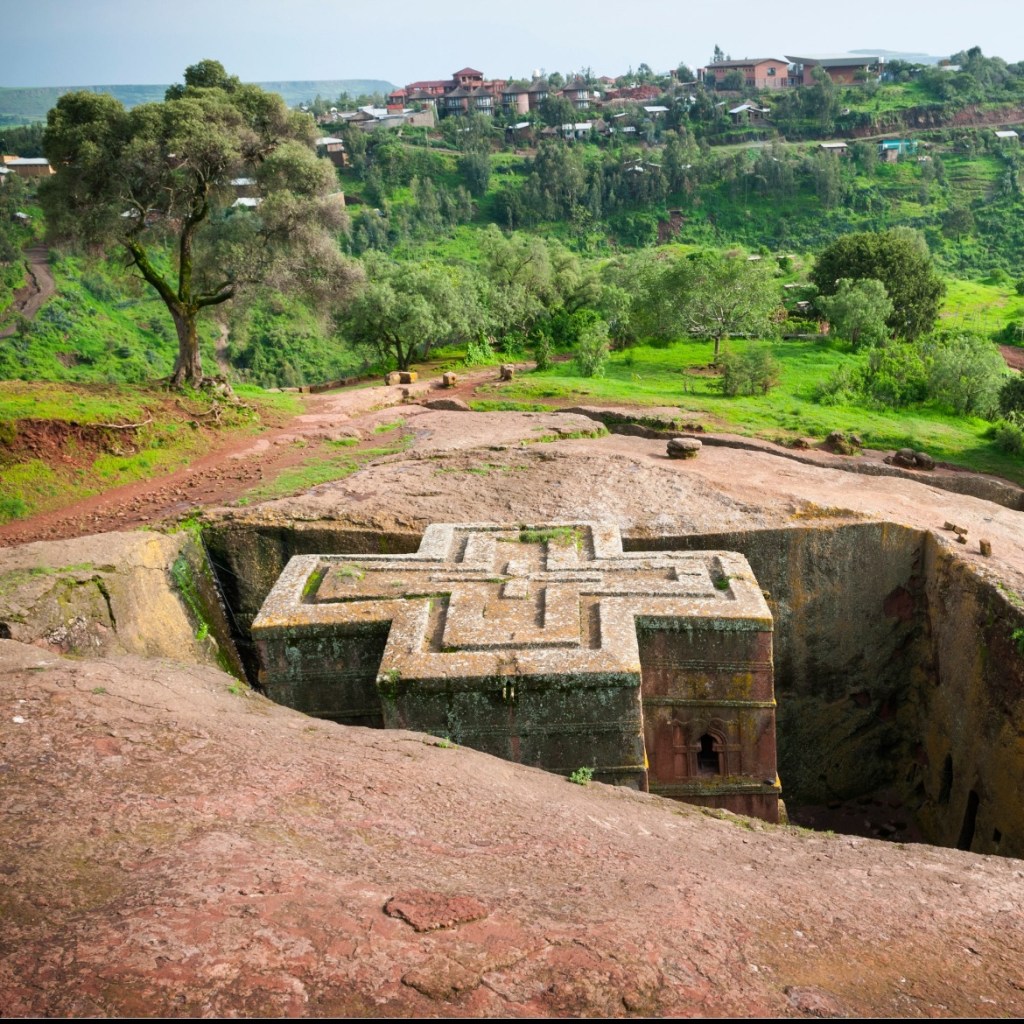
Fasting has always been more than just a physical practice—it is a doorway, a passage into deeper awareness, where the body weakens but the spirit sharpens. In this altered state, truths long buried can rise to the surface. Lalibela called my name, and as I traced its mysteries, I saw how fasting and this sacred site are intertwined in ways few recognize.
Carved into the living rock of Ethiopia’s highlands, the rock-hewn churches of Lalibela stand as a defiant anomaly in history. Their precision, scale, and underground complexity challenge mainstream explanations. The legend tells us that King Gebre Meskel Lalibela received a divine vision, where angels transported him to heaven and revealed the blueprint for a New Jerusalem—one he would carve from the earth itself.
Was his revelation fueled by spiritual fasting, unlocking an ancient method of receiving divine knowledge? Did fasting, practiced by the monks and builders, serve as a bridge to higher consciousness and esoteric wisdom? And could these churches hold secrets far older than Christianity itself?
As I fast for alignment and health, these questions stir within me. And as I search, I see how it all comes together.
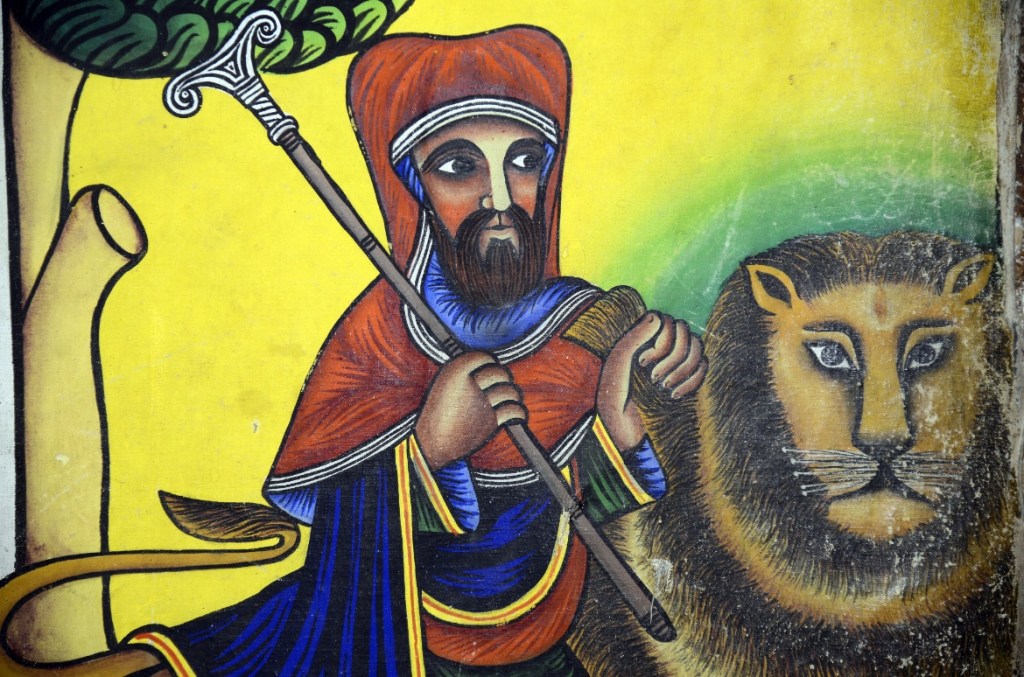
The King and Queen Behind Lalibela’s Vision
The churches of Lalibela were commissioned by King Gebre Meskel Lalibela (c. 1181–1221 CE) of the Zagwe Dynasty, who envisioned a “New Jerusalem” in Ethiopia. This dream was fueled by a divine vision—some say he was transported to the spiritual realm and shown how to build these churches by angels themselves.
Alongside him, Queen Meskel Kebra, a powerful woman in her own right, played a crucial role in supporting this holy endeavor. Together, they sought to establish Ethiopia as a sacred Christian center, especially after Muslim conquests made Jerusalem inaccessible to Christian pilgrims.
But what if the churches of Lalibela hold secrets far older than Christianity?
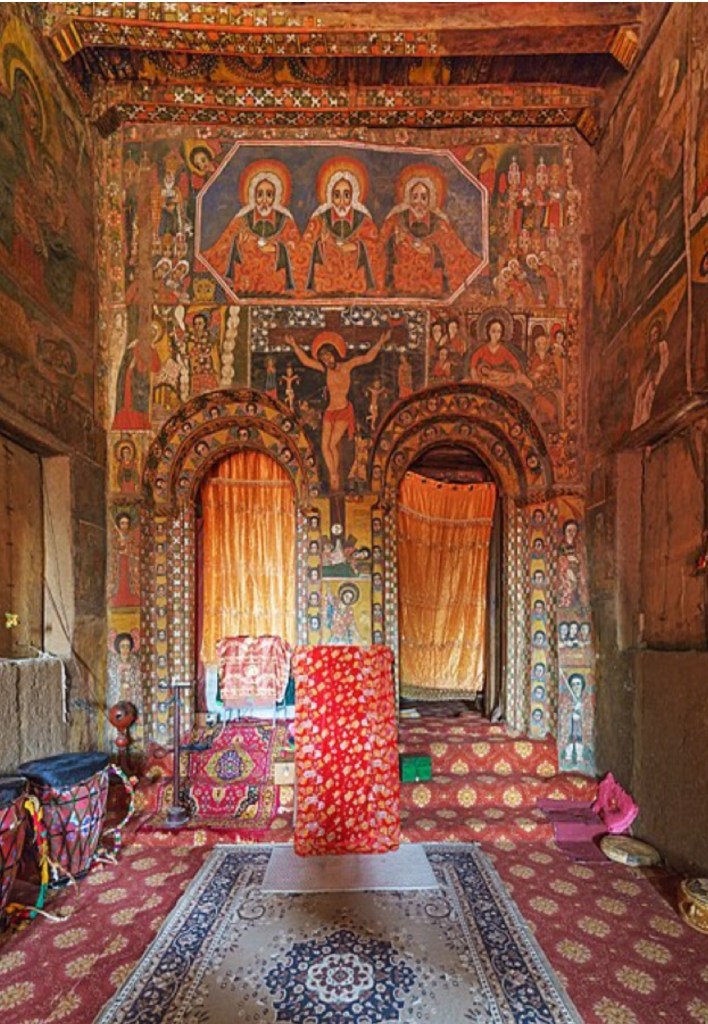
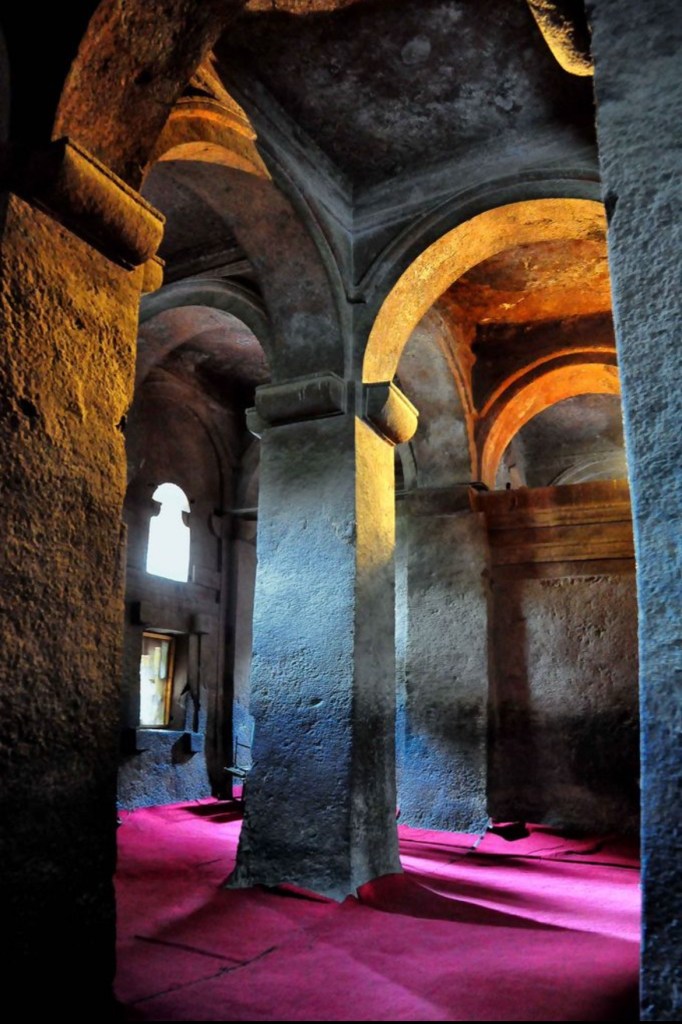
Interior of The Church of Debre Berhan Selassie – Photo by A. Savin – February 2018, sacred-sites.org
A Vision from the Divine: Fasting and Lalibela’s Origins
Lalibela’s creation story follows a pattern found throughout spiritual traditions—a leader, deep in devotion, receives revelation through an altered state. Many of history’s greatest spiritual figures fasted before moments of divine awakening:
• Moses fasted before receiving the Ten Commandments.
• Yeshua (Jesus) fasted for 40 days before his spiritual mission.
• Ethiopian Orthodox Christianity mandates fasting up to 250 days a year, especially before pilgrimages.
Did King Lalibela’s own fasted state open a portal to higher knowledge?
When hunger strips away distraction, the mind enters a heightened state of perception. Many ancient traditions—from Egyptian mystery schools to Sufi mysticism—believed that fasting allowed initiates to connect with divine frequencies. Could Lalibela’s vision be part of this same lineage of sacred fasting?
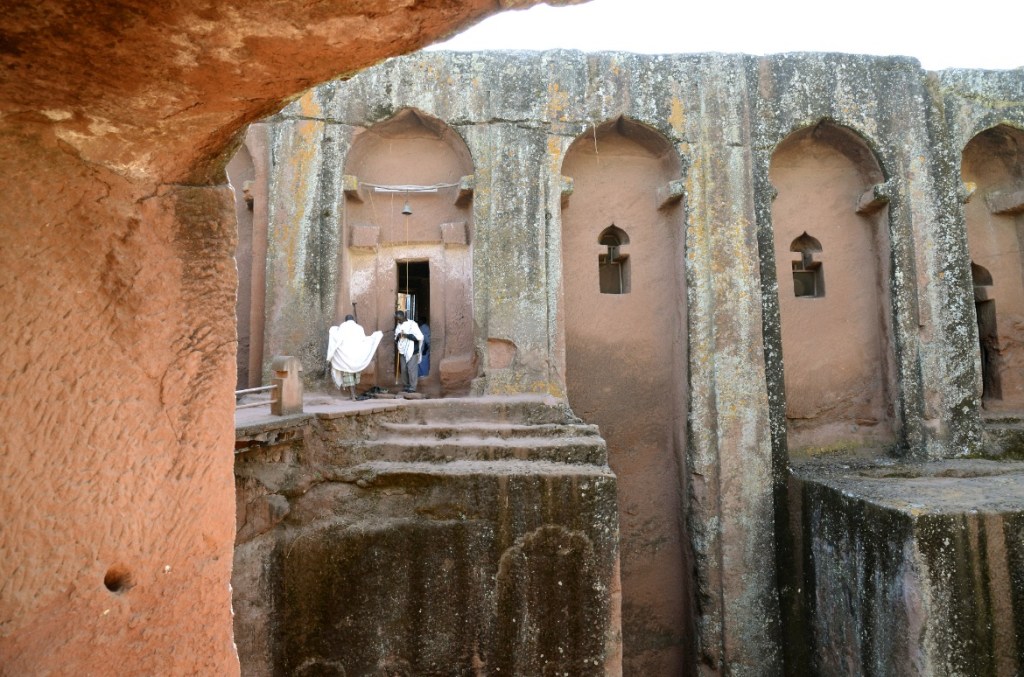
Sacred Geometry and Mystical Codes in Lalibela’s Churches
The 11 monolithic churches of Lalibela are not randomly placed—they follow a precise spiritual blueprint. Their arrangement suggests a deep understanding of sacred geometry, energy flow, and initiation rites.
1. Numerology and Divine Architecture
• 11 churches → The number 11 is seen as a gateway to divine consciousness, beyond the limits of the material world.
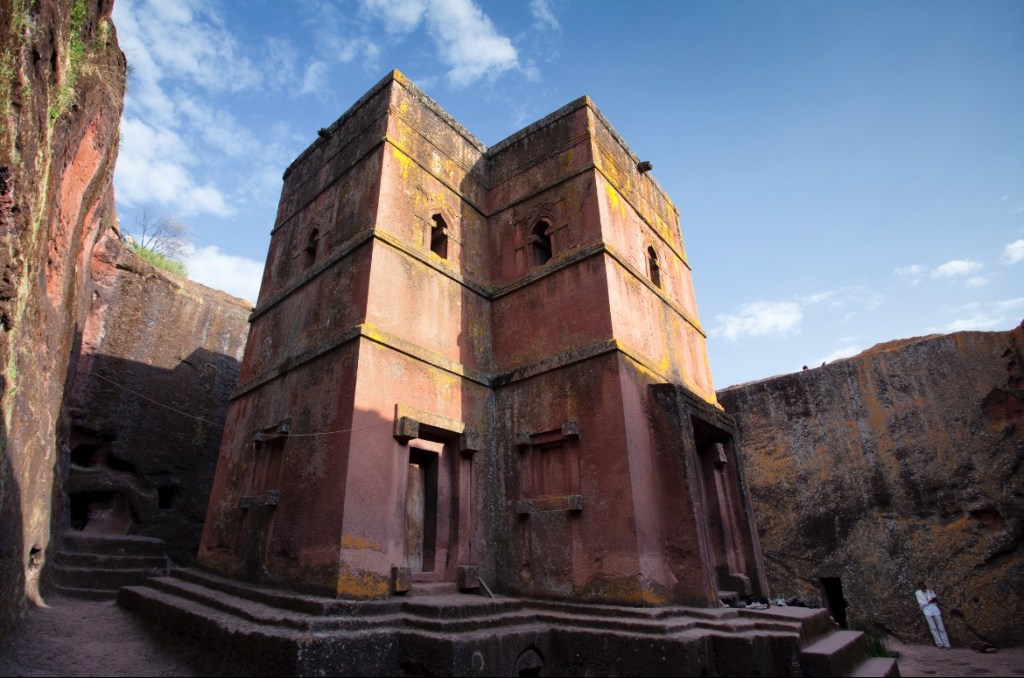
• Beta Giyorgis (St. George’s Church) → Its cross-shaped design and celestial alignment resemble the planning of Egyptian temples and European cathedrals, hinting at hidden knowledge of cosmic order.
2. Underground Tunnels: A Symbol of Spiritual Initiation
The churches are connected by underground tunnels, much like the passageways in ancient Egyptian and Mayan temples. These tunnels may symbolize:
• The underworld journey of the soul, reflecting death and rebirth.
• An initiation path, where fasting pilgrims would move through darkness into the light of spiritual wisdom.
3. Water and Energy Flow
Lalibela was built over hidden underground rivers, an architectural choice that mirrors sites of ancient power. Many esoteric traditions believe that:
• Water amplifies spiritual energy, allowing fasting monks to tune into higher states of consciousness.
• Underground rivers create energy vortexes, much like the sacred geometry of pyramids and megalithic sites.
Could the fasting monks and builders of Lalibela have used these energies to deepen their connection to the divine?
Conspiracy Theories and Lost Knowledge: Who Really Built Lalibela?
While mainstream history attributes Lalibela’s construction to medieval Ethiopian builders, the site’s complexity has led to alternative theories.
1. The Pre-Christian Builders Theory
• Some researchers believe that Lalibela was not originally Christian but an older sacred site, later claimed by the Zagwe Dynasty.
• Similarities to ancient Egyptian and Nubian temples suggest it may have been part of a much older spiritual tradition.
2. The Knights Templar Connection
• Some scholars argue that the Knights Templar, a medieval Christian order, may have influenced or even funded Lalibela’s construction.
• The cross-shaped churches, hidden underground passages, and geometric layout bear striking similarities to European Templar architecture.
• Ethiopia’s ties to ancient Christian relics, particularly the Ark of the Covenant, add to this theory—was Lalibela meant to house a sacred treasure?
3. Advanced Technology or Extraterrestrial Influence?
• The laser-like precision of Lalibela’s rock-cut churches seems beyond the capabilities of medieval hand tools.
• Some believe lost technology or extraterrestrial knowledge may have played a role, similar to the theories surrounding the Great Pyramids, Machu Picchu, and Angkor Wat.
Could Lalibela hold hidden knowledge about the past, concealed beneath its sacred stone?
Fasting as the Key to Unlocking Lalibela’s Power
Fasting is an ancient tool of enlightenment, practiced in every major spiritual tradition. In Ethiopia, it is deeply linked to monastic life, pilgrimage, and sacred transformation.
• Ethiopian Orthodox monks fast before prayer and chant rituals.
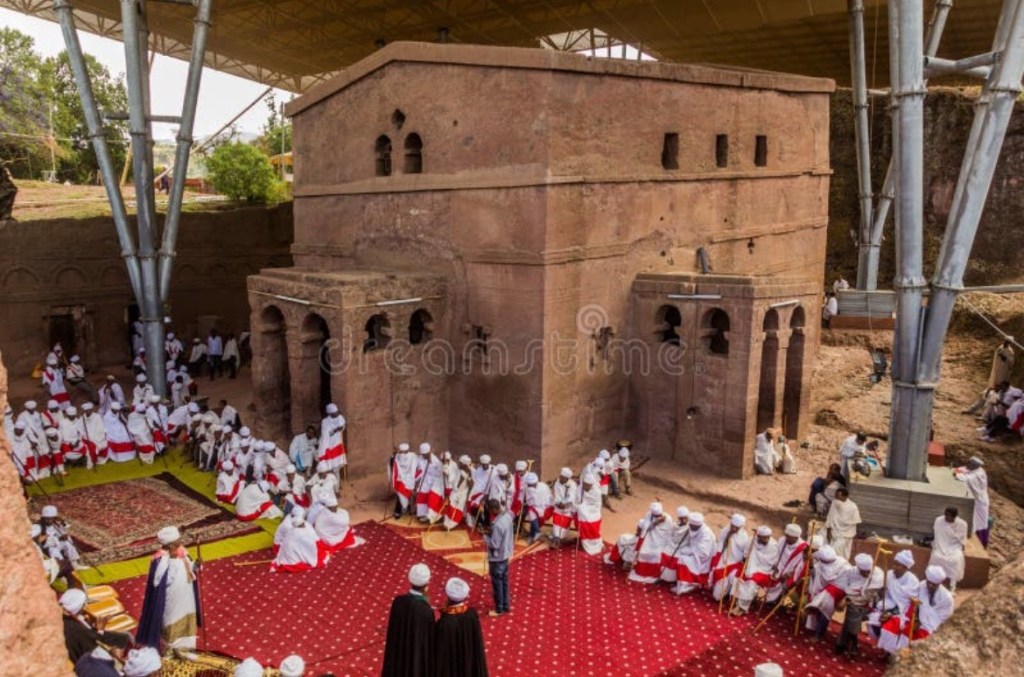
• Pilgrims fast before entering Lalibela, believing it allows them to attune to its spiritual frequency.
• Ancient initiates fasted before entering hidden temples, believing hunger would strip away illusions and allow them to receive sacred knowledge.
Could it be that fasting was not just preparation—but an actual tool used in the creation of Lalibela?
• A fasting king, receiving divine blueprints.
• Fasting builders, carving stone in a trance-like state, guided by unseen forces.
• Fasting monks, preserving wisdom long lost to the outside world.
Perhaps Lalibela was built not just with tools, but through the fasting-induced alignment of its creators with a higher knowledge.
Final Thoughts: The Portal Hidden in Lalibela’s Stones
Lalibela is more than a church.
More than a monument.
More than a legend.
It is a spiritual gateway, a testament to the hidden power of fasting, devotion, and sacred knowledge.
Even now, as I fast for alignment and clarity, I reflect on what King Lalibela may have experienced. Could fasting be the missing link that explains his vision, the endurance of the builders, and the site’s hidden codes?
And if fasting was a tool for the greatest mystics, sages, and spiritual architects—what knowledge might still be waiting for us, just beyond the veil of hunger?
What do you think?
Was Lalibela divinely inspired, or does it hold a more ancient, hidden truth? Could fasting be a key to unlocking spiritual knowledge? Share your thoughts below!
✨ Join us on Livity.blog to rediscover the wisdom of Aboriginal heritage, unveil hidden histories, and empower Indigenous futures. Together, let’s honor the past to inspire a brighter tomorrow.
References:
1. Wikipedia contributors. Gebre Meskel Lalibela. Wikipedia, The Free Encyclopedia. Retrieved from https://en.wikipedia.org/wiki/Gebre_Meskel_Lalibela
2. UNESCO World Heritage Centre. Rock-Hewn Churches, Lalibela. Retrieved from https://whc.unesco.org/en/list/18
3. Finneran, N. (2005). The Archaeology of Ethiopia. Routledge.
4. Phillipson, D.W. (2009). Ancient Churches of Ethiopia: Fourth–Fourteenth Centuries. Yale University Press.
5. Kaplan, S. (1992). The Beta Israel (Falasha) in Ethiopia: From Earliest Times to the Twentieth Century. New York University Press.
6. Gervers, M. (2016). Ethiopian Medieval Monolithic Churches: Art and Function. Routledge.
7. Buxton, D. (1970). The Rock-Hewn and Other Medieval Churches of Ethiopia. British Academy.
8. Derat, M. (2018). The Zagwe Dynasty: A History of Power and Orthodoxy in Medieval Ethiopia. Brill Academic Publishers.
9. Levin, D. (2000). Architectural Symbolism in the Churches of Lalibela. Journal of Ethiopian Studies, 33(1), 45–68.
10. Pankhurst, R. (1997). History of Ethiopian Architecture. Institute of Ethiopian Studies, Addis Ababa University.
11. Munro-Hay, S. (2002). Ethiopia, the Unknown Land: A Cultural and Historical Guide. I.B. Tauris.
12. Chekroun, A. (2018). From Axum to Lalibela: The Transformation of Ethiopian Sacred Architecture. Journal of African History, 59(2), 233–256.
13. Tadese, T. (1972). Church and State in Ethiopia (1270-1527). Oxford University Press.
14. Mercier, J. (2000). Ethiopian Christian Art: A Reflection of Spirituality and Identity. Paul Holberton Publishing.
15. Heldman, M. (1993). African Zion: The Sacred Art of Ethiopia. Yale University Press.
16. Orlowska, I. (2013). Hidden Sacred Spaces: The Underground Churches of Lalibela. African Archaeological Review, 30(4), 447–468.
17. Fiaccadori, G. (2012). The Queen of Sheba and Ethiopian Traditions. Journal of Near Eastern Studies, 71(3), 215–232.
18. Tamrat, T. (1972). Church and State in Ethiopia, 1270-1527. Clarendon Press.
19. Rouaud, M. (2017). The Influence of Ancient Egypt on Ethiopian Religious Architecture. Proceedings of the International Congress of Ethiopian Studies, 45(2), 321–340.
20. Poissonnier, B. (2015). Sacred Spaces and Ritual Practice in Ethiopian Orthodox Christianity. Harrassowitz Verlag.

 Livity Blog