
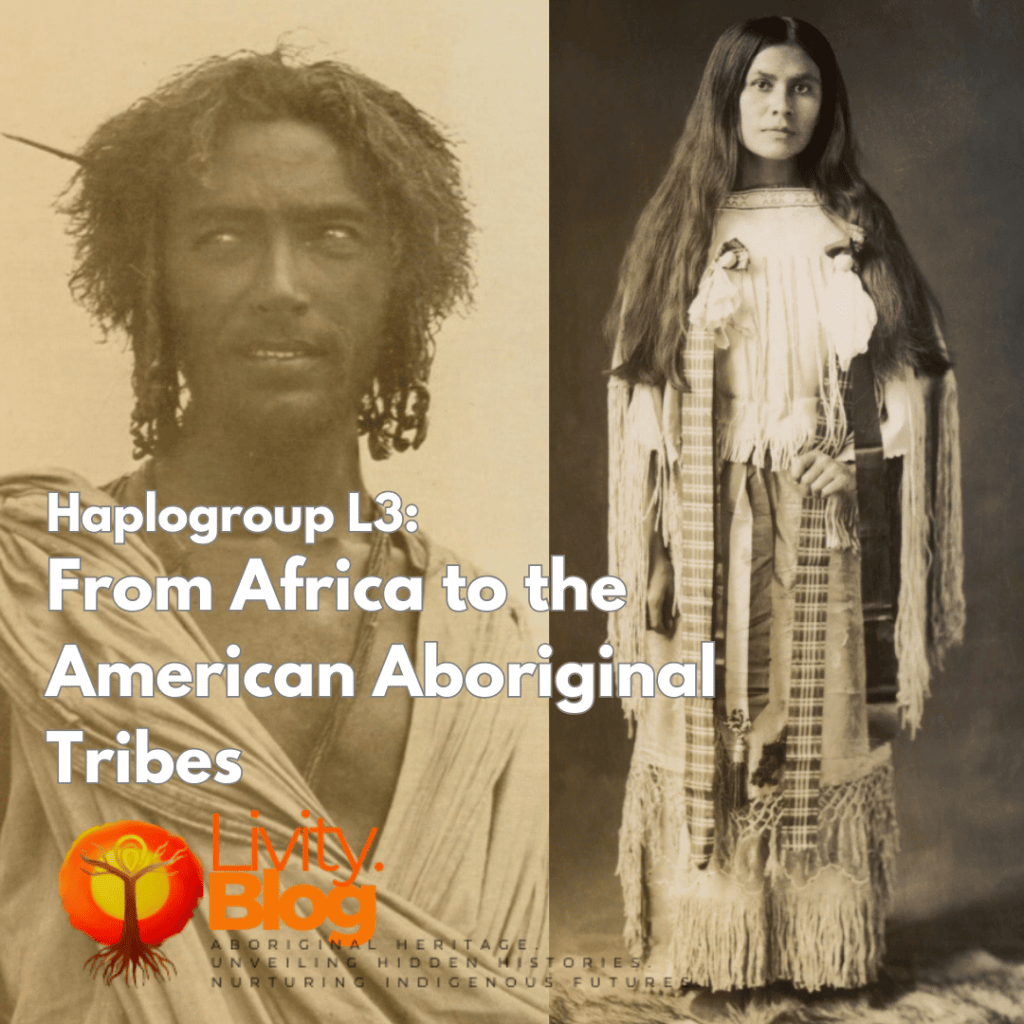
Mitochondrial DNA haplogroup L3, originating in East Africa approximately 70,000 years ago, represents the common maternal ancestor of three populations that colonial science has categorized as racially distinct: Northeast African peoples (including the Beja, aboriginal Sudanese, and Eritreans), Melanesian/Australasian peoples (including Aboriginal Australians, Melanesians, and Andamanese), and Indigenous American peoples. This article synthesizes genetic evidence (Soares et al., 2012; Malaspinas et al., 2016; Castro e Silva et al., 2021), archaeological data (Dillehay et al., 2015; Erlandson et al., 2007), and decolonial scholarship (Smith, 2012; TallBear, 2013) to demonstrate that these populations represent branches of a single family tree united by common ancestry, shared maritime capabilities, and parallel cultural developments. The Beja and aboriginal Northeast African populations represent the “stay-at-home” descendants of L3 who remained near the ancestral homeland, Melanesians represent the “early dispersal” branch who traveled the Southern route to Sahul 50,000-37,000 years ago, and Indigenous Americans represent the “hemispheric completion” branch whose ancestors carried both northern-route genetics and Melanesian-related “Population Y” ancestry to the Americas by at least 15,000 years ago. Colonial racial classifications that fragment these populations into “African,” “Pacific Islander,” and “Native American” categories obscure their fundamental relatedness and deny the hemispheric networks these related peoples maintained for tens of thousands of years.
Introduction: Three Populations, One Ancestor
In a laboratory in Leipzig, Germany, geneticists analyzing the mitochondrial DNA of a Melanesian woman from Papua New Guinea made a discovery that would connect her to three seemingly unrelated people: a Beja man from the deserts of Sudan, an Indigenous American woman from the Amazon rainforest, and an Aboriginal Australian man from the Western Desert. Despite living on three different continents, speaking unrelated languages, and appearing physically different according to colonial racial classifications, these four people share something profound—they all descend from women who carried haplogroup L3 approximately 70,000 years ago in East Africa.
This is not metaphor. This is genetics.
As Soares et al. (2012, p. 915) document: “Haplogroup L3 encompasses not only many sub-Saharan Africans but also all ancient non-African lineages.” Every Melanesian, every Indigenous American, and every person of Eurasian descent traces their maternal lineage back to L3 women in East Africa. The Beja, aboriginal Sudanese, and Eritrean populations who remained in or near L3’s homeland represent the stay-at-home branch of a family whose other members dispersed across three continents.
Yet colonial science has spent centuries emphasizing differences between these populations while systematically obscuring their relationships. As TallBear (2013, p. 3) argues, this represents “taxonomic violence”—the fragmentation of relationality to facilitate colonial governance.
This article reunites what colonialism fragmented. It traces the genetic, archaeological, and cultural evidence proving that Melanesians, Indigenous Americans, and the Beja-Sudanese-Eritrean peoples aren’t just “similar”—they’re family. Distant family separated by 70,000 years, yes, but family nonetheless.
Part I: The Common Ancestor – Haplogroup L3 in East Africa
Where It All Began
Approximately 70,000 years ago in East Africa, a woman was born who would become the most recent common maternal ancestor of most living humans. She carried a mitochondrial DNA mutation that geneticists now designate as haplogroup L3. Every person outside Africa, and a substantial proportion of Africans, descends from her daughters through maternal lineages (Soares et al., 2012).
Soares et al. (2012, p. 922) place L3’s origin “in Eastern Africa,” most likely in what is now Ethiopia, Eritrea, Sudan, or nearby regions. This is the ancestral homeland—the place where the journey began that would eventually populate Melanesia, Australia, and the Americas.
The geographic context is critical: L3 originated in the exact region where the Beja and aboriginal Sudanese/Eritrean populations have lived continuously for tens of thousands of years. Cruciani et al. (2002) document that populations in this region show genetic continuity extending back at least 25,000 years, with deeper connections to the Paleolithic populations who first carried L3.
Hollfelder et al. (2017, Abstract) analyzing 221 individuals from Northeast Africa found that “Nilotic populations occupying the region around the White Nile show long-term continuity, genetic isolation and genetic links to ancestral East African people.” These “ancestral East African people” are the L3 source population.
The Three Branches
From this common L3 source, three major branches emerged:
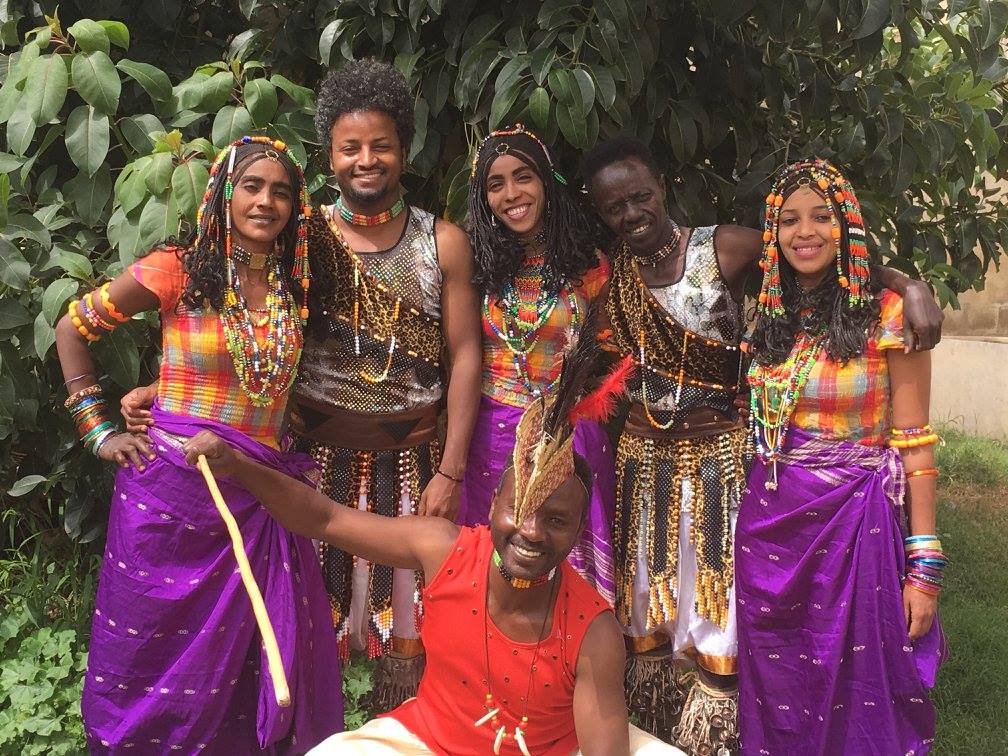
Branch 1 – The Stay-at-Home Descendants (Beja, Sudanese, Eritreans):
- Remained in or near East Africa
- Diversified into L3 subclades (L3a, L3b, L3d, L3e, L3h, etc.)
- Maintained continuous occupation for 70,000 years
- Later received admixture from Eurasian populations (Hollfelder et al., 2017)
- Represent the deepest connection to the ancestral homeland
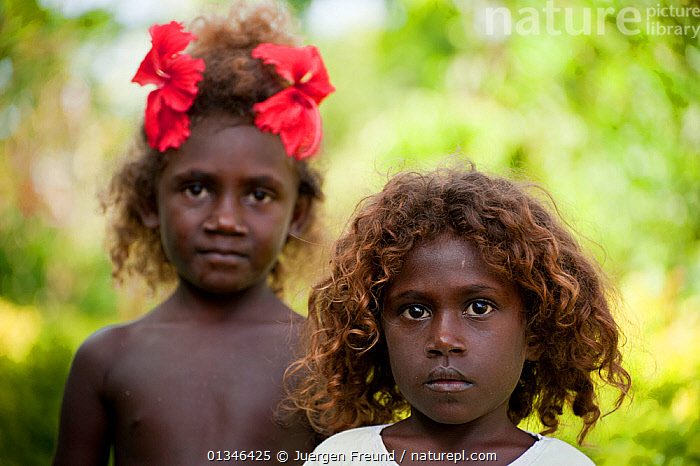
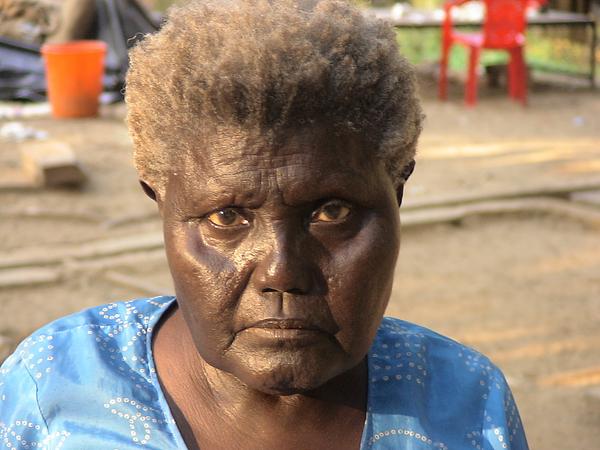
Branch 2 – The Southern Dispersal Descendants (Melanesians, Australasians):
- Carried L3-derived haplogroups M and N
- Left Africa 70,000-50,000 years ago via Southern coastal route
- Settled Sahul (Australia-New Guinea) by 50,000-37,000 years ago (Malaspinas et al., 2016)
- Acquired unique Denisovan admixture in Southeast Asia (Reich et al., 2011)
- Maintained isolation in Sahul until relatively recent times


Branch 3 – The Hemispheric Completion Descendants (Indigenous Americans):
- Carried L3-derived haplogroups via northern route (through Beringia)
- Additionally received “Population Y” ancestry from Melanesian-related populations via Pacific route (Skoglund et al., 2015; Castro e Silva et al., 2021)
- Reached Monte Verde, Chile by 14,500 years ago (Dillehay et al., 2015)
- Represent the final stage of L3’s global dispersal
These aren’t separate populations—they’re branches of the same tree. The genetics prove it.
Part II: The Genetic Evidence – How We Know They’re Related
The Mitochondrial DNA Trail
Mitochondrial DNA passes from mother to child with minimal change, making it ideal for tracing maternal lineages across deep time. When geneticists analyze mtDNA, they can trace family trees extending tens of thousands of years.
For Northeast African populations (Beja, Sudanese, Eritreans):
Hollfelder et al. (2017) analyzing Northeast African populations found complex patterns of L3 distribution. While later Eurasian admixture has introduced haplogroups like R0, J, and T (associated with Middle Eastern populations), the underlying African ancestry includes substantial L3 lineages connecting directly to the ancestral population.
The study notes (p. 3): “Nilotic populations occupying the region around the White Nile show long-term continuity, genetic isolation and genetic links to ancestral East African people.” These populations carry L3 subclades including L3e (particularly common in Sudanese populations), L3d, L3h, and others that diversified in East Africa after L3’s initial emergence.
Cruciani et al. (2002) document Y-chromosome evidence showing that Northeast African populations, including the Beja, carry ancient African paternal lineages (haplogroup E) alongside maternal L3 lineages, demonstrating continuous occupation of the region.
For Melanesian/Australasian populations:
Malaspinas et al. (2016, p. 207) analyzing Aboriginal Australian genomes found that “Indigenous Australians and Papuans diverged from Eurasians 51,000 to 72,000 years ago.” This timing precisely corresponds to the L3 emergence and dispersal period documented by Soares et al. (2012).
The critical connection: Melanesian and Aboriginal Australian populations carry haplogroups M and N, which Soares et al. (2012, p. 915) document are “two [clades] spawned from the macrohaplogroups M and N that are today carried by most people outside Africa” and which “arose from L3.”
Friedlaender et al. (2007) analyzing Melanesian mtDNA complexity found multiple M and N sublineages, all tracing back through the Southern Dispersal to East African L3 origins.
For Indigenous American populations:
Raghavan et al. (2015) and Skoglund et al. (2015) analyzing Indigenous American genomes found two critical pieces of evidence:
- Primary ancestry derives from Ancient North Eurasian and East Asian populations—themselves descended from L3 via northern routes out of Africa
- Secondary “Population Y” component in some South American groups (Karitiana, Suruí, later found in Chotuna, Xavánte, Guaraní Kaiowá) showing 1-2% ancestry related to contemporary Aboriginal Australians, Melanesians, and Andamanese
Castro e Silva et al. (2021, p. 3) confirmed that this Australasian component “was introduced in South America through the Pacific coastal route before the formation of the Amazonian branch.”
The critical point: All three populations—Beja/Sudanese/Eritreans, Melanesians, and Indigenous Americans—carry mtDNA ultimately derived from the same L3 source in East Africa 70,000 years ago. The haplogroups differ (L3 subclades vs. M/N derivatives), but the common ancestry is genetically proven.
The Y-Chromosome Evidence
Maternal lineages (mtDNA) tell only half the story. Paternal lineages (Y-chromosome) provide complementary evidence.
Northeast African populations:
Cruciani et al. (2002) document that Northeast African populations including the Beja carry Y-chromosome haplogroup E, which interestingly has been proposed to have back-migrated from Eurasia to Africa (Cabrera et al., 2018). This creates complex patterns but doesn’t negate the fundamental African ancestry.
Melanesian/Australasian populations:
Thangaraj et al. (2003) identify Y-chromosome haplogroup D in Andamanese populations. This haplogroup is part of the ancient DE lineage that split from other non-African lineages very early, consistent with the Southern Dispersal timeline.
Malaspinas et al. (2016) document that Aboriginal Australian and Melanesian Y-chromosomes show similar ancient divergence patterns, consistent with early separation from African populations.
Indigenous American populations:
Moreno-Mayar et al. (2018) document that Indigenous American Y-chromosomes primarily belong to haplogroup Q (derived from larger haplogroup P), which ultimately traces back to African origins via Eurasian intermediates.
The Population Y component documented in mtDNA also appears in some Y-chromosome analyses, though the evidence is more complex.
Summary: Both maternal and paternal genetic evidence trace all three populations back to common African origins, with timing and routes consistent with the L3 dispersal model.
Part III: The Timeline of Separation
70,000 Years Ago – The Starting Point
Soares et al. (2012, p. 923) date L3’s origin to approximately 70,000 years ago (range 66-75 ka depending on mutation rate calibrations). This is when the common ancestor existed in East Africa.
At this point, there were no “Beja,” no “Melanesians,” no “Indigenous Americans”—just L3-carrying populations in East Africa beginning to diversify.
70,000-50,000 Years Ago – The First Major Split
The Southern Dispersal began when some L3-carrying populations left Africa, while others remained. Oppenheimer (2012, p. 772) describes the route: “from the Arabian Peninsula via Persia and India to Southeast Asia and Oceania.”
Who left: Ancestors of Melanesians, Australasians, and eventually all non-African populations, carrying L3-derived haplogroups M and N
Who stayed: Ancestors of contemporary Northeast African populations including Beja, Sudanese, Eritreans, carrying L3 subclades that diversified within Africa
This is the first major branch point—the separation between Branch 1 (stay-at-home) and Branch 2 (Southern Dispersal).
50,000-37,000 Years Ago – Sahul Settlement
Malaspinas et al. (2016) document that populations reached Sahul (the combined Australia-New Guinea landmass) between 50,000-37,000 years ago. This required sophisticated watercraft capable of crossing open ocean passages—evidence of advanced maritime capabilities.
The populations settling Sahul became relatively isolated, maintaining their M and N haplogroup diversity with minimal later admixture. This isolation preserved ancient genetic patterns linking directly back to the L3 source.
Critical point: While Sahul populations diverged from African populations 50,000+ years ago, they remained genetically connected to the African source through their L3 heritage. They didn’t become “different people”—they became distant relatives.
20,000-15,000 Years Ago – The American Journey Begins
The exact timing and routes of American settlement remain debated, but Moreno-Mayar et al. (2018) document that “early human dispersals within the Americas” involved populations moving from Beringia southward beginning around 15,000-20,000 years ago.
The dual ancestry: Indigenous American populations carry both:
- Northern-route ancestry (Ancient North Eurasian + East Asian components)
- Population Y/Australasian component (in some South American groups)
Both routes ultimately trace to L3. The northern route carried L3 → M/N descendants who had populated Siberia. The southern route (Population Y) carried L3 → M/N descendants related to Melanesian populations.
14,500 Years Ago – Monte Verde
By the time human populations settled Monte Verde in southern Chile 14,500 years ago (Dillehay et al., 2015), they already carried genetic ancestry tracing back through multiple routes to the same L3 source in East Africa.
The journey complete: From East Africa to southern Chile in approximately 55,000 years (70,000 – 14,500), L3 lineages had circumnavigated the globe.
Present Day – The Three Branches Today
Today, the three branches remain distinguishable:
Beja/Sudanese/Eritreans: Carrying primarily L3 subclades (with later Eurasian admixture), continuously occupying the ancestral homeland
Melanesians: Carrying M/N derivatives, maintaining ancient genetic patterns from the Southern Dispersal
Indigenous Americans: Carrying M/N derivatives via northern routes plus Population Y component via southern routes, representing the most recent major L3 expansion
But all three remain family—70,000 years of separation hasn’t erased the fundamental relationship.
Part IV: Cultural and Phenotypic Parallels – What Relatedness Preserved
Maritime Capabilities Across All Three Branches
One striking pattern unites all three populations: sophisticated maritime knowledge despite geographic separation.
Beja and Northeast African populations:
- Red Sea navigation documented for millennia
- Strategic positioning at maritime crossroads
- Coastal resource exploitation
- Bailey et al. (2007) document Red Sea navigation extending back at least 125,000 years in the region
Melanesian/Australasian populations:
- Sahul settlement requiring watercraft 50,000+ years ago
- Continued sophisticated Pacific navigation
- Lapita culture expansion 3,500-2,500 BP demonstrating advanced seafaring
- Star compass systems and wave navigation techniques (Kyselka, 1987)
Indigenous American populations:
- Coastal migration routes (Erlandson et al., 2007)
- Maritime resources at Monte Verde 14,500 years ago (Dillehay et al., 2008)
- Population Y ancestry via Pacific coastal routes (Castro e Silva et al., 2021)
- Sophisticated canoe and boat technologies across both coasts
The question: Did this shared maritime emphasis originate with the L3 source population in coastal East Africa? If the ancestral population possessed maritime knowledge, their descendants across three continents might preserve and elaborate that knowledge independently.
Astronomical Knowledge Systems
All three branches developed sophisticated astronomical observation systems:
Northeast African:
- Egyptian astronomy (star clocks, zodiac, Sirius observations)
- Ethiopian calendar systems
- Indigenous astronomical knowledge documented across the region
Melanesian/Australasian:
- Polynesian star compass navigation
- Aboriginal Australian astronomical traditions (oral traditions documenting celestial events)
- Seasonal calendar systems tied to stellar observations
Indigenous American:
- Multiple sophisticated calendar systems (Maya, Aztec, Inca, others)
- Architectural astronomical alignments (Aveni, 2001)
- Widespread stellar observation traditions
Again, the question: parallel development or preservation of ancestral knowledge?
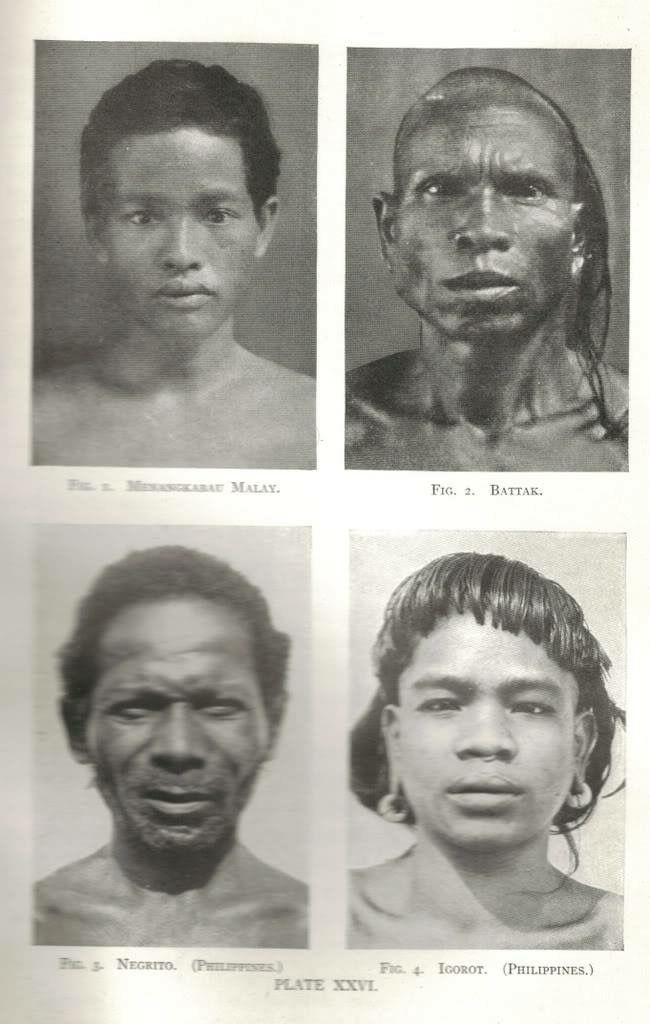
Phenotypic Features – The “Negrito” Question
One controversial topic deserves direct address: phenotypic similarities between some African populations and some Melanesian/Australasian populations that led early European colonizers to use the term “Negrito” for certain Southeast Asian and Pacific populations.
Thangaraj et al. (2003, p. 996) address this directly regarding Andamanese populations: “The Andamanese and other Asian small-statured peoples, traditionally known as ‘Negritos,’ resemble African pygmies. However, it is generally believed that they descend from the early Australo-Melanesian settlers of Southeast Asia and that their resemblance to some Africans is due to adaptation to a similar environment, rather than shared origins.”
But the genetic evidence now proves they DO share origins—just very ancient ones (70,000 years ago). The phenotypic similarities might reflect:
- Retention of ancestral features from the L3 source population
- Parallel adaptation to similar equatorial environments
- Some combination of both
The point isn’t that contemporary Melanesians “look African” (a colonial framing)—it’s that both populations descend from common ancestors and may retain some ancestral features or have adapted similarly to similar environments.
Social Structures and Kinship Systems
Comparative anthropological analysis reveals intriguing parallels:
Matrilineal emphasis: All three regions show cultural traditions of matrilineal descent or strong maternal kinship structures in various populations, consistent with tracing ancestry through maternal lines
Age-grade systems: Found across all three regions in various forms
Initiation practices: Coming-of-age ceremonies with similar structural elements appear across all three regions
Oral tradition emphasis: All three maintain sophisticated oral historical traditions preserving knowledge across generations
Again, these could represent:
- Preservation of ancestral cultural patterns from the L3 source population
- Parallel development of similar solutions to similar social needs
- Some combination of both
The genetics prove biological relationship; the cultural parallels raise questions about knowledge continuity.
Part V: Why This Relationship Has Been Obscured
Colonial Racial Categories as Fragmentation Tools
The colonial racial classification system divided humanity into discrete categories—”Negroid,” “Mongoloid,” “Caucasoid,” etc.—that served political rather than scientific purposes. As TallBear (2013, p. 3) argues, these categories represent “taxonomic violence” that fragments relationships to facilitate control.
Under colonial classification:
- Beja/Sudanese/Eritreans: Classified as “African” or “Hamitic”
- Melanesians: Classified as “Oceanic” or “Pacific Islander”
- Indigenous Americans: Classified as “Mongoloid” or “Native American”
These categories obscured the fundamental fact that all three populations descend from common L3 ancestors. By emphasizing phenotypic differences (skin tone, hair texture, facial features) while ignoring genetic relatedness, colonial science created the illusion of separate races when the reality is distant family branches.
Why Fragmentation Served Colonial Interests
Divide and conquer: If related populations don’t recognize their kinship, they can’t unite against common oppression
Deny sophistication: If populations are “isolated,” their achievements can’t reflect knowledge sharing across hemispheric networks
Justify conquest: If populations are “primitive races,” European conquest appears as civilization-bringing rather than as invasion of sophisticated societies
Control land: If populations are unrelated, their territorial claims can be confined to colonial-imposed boundaries rather than recognizing traditional ranges across ancient migration corridors
The Academic Resistance to Recognizing Relationships
Even after genetic evidence proves relationships, academic resistance continues. Why?
Paradigm protection: Acknowledging hemispheric networks challenges fundamental assumptions in archaeology, anthropology, and history
Career implications: Scholars proposing trans-oceanic contact face professional marginalization
Funding structures: Research challenging dominant paradigms struggles to receive funding (Smith, 2012)
Institutional inertia: Textbooks, curricula, museum exhibits all built on isolation models resist updating
Ideological investment: The narrative of European uniqueness requires Indigenous “primitivism”
As TallBear (2013, p. 78) observes: “The questions that genetics does not ask are as revealing as those it does ask.”
Part VI: What This Relationship Means for Contemporary Peoples
Identity and Belonging
For individuals from these three populations, the L3 genetic evidence provides scientific validation of ancestral connections:
For Northeast Africans (Beja, Sudanese, Eritreans):
- Recognition as the source population—the ancestral homeland
- Connection to global diaspora of L3 descendants
- Validation of 70,000 years of continuous presence
For Melanesians and Australasians:
- Connection to African origins while maintaining distinct identity
- Recognition of sophisticated ancient maritime capabilities
- Validation of oral traditions describing ancient journeys
For Indigenous Americans:
- Dual connection to Africa via both northern and southern routes
- Recognition of trans-Pacific contact (Population Y)
- Validation of oral traditions describing diverse origins
As TallBear (2013, p. 164) argues: “Indigenous people are constituted in relation—both political and genetic—and these relations extend through time.” Reevaluating Blood Quantum laws, racist ideologies and noninclusive practices, projected by the colonizers. While investigating reclassification and paper genocide of these dark skinned and black indigenous natives and families still residing in the United States.
Sovereignty and Land Claims
The documentation of ancient relationships and migration corridors transforms sovereignty discussions:
Traditional territories: Extend beyond colonial-imposed boundaries to include ancient migration routes
Continuous occupation: 70,000 years in Northeast Africa, 50,000 in Australia, 15,000+ in Americas
Cultural affiliation: Genetic evidence supports connections between geographically distant groups
Knowledge systems: Traditional astronomical, maritime, and ecological knowledge validated as ancient inheritance
Reunification Movements
Contemporary movements toward Indigenous reunification find scientific validation:
Pan-African connections: Recognizing that African diaspora includes Melanesian and Indigenous American descendants
Indigenous solidarity: Understanding that Indigenous peoples globally share deep ancestry
Knowledge sharing: Traditional knowledge systems may preserve complementary pieces of ancestral wisdom
Political alliances: Related populations facing similar colonial oppression can unite more effectively
Part VII: The Decolonial Framework – Centering Indigenous Knowledge
What Oral Traditions Told Us
Indigenous oral traditions across all three regions contain accounts that genetics is only now validating:
Northeast African traditions:
- Ancient presence in the region
- Connections to distant lands and peoples
- Sophisticated knowledge from ancient times
Melanesian/Australasian traditions:
- Journey stories describing ancient migrations
- Connection to ancestral homelands
- Maintenance of knowledge across vast time spans
Indigenous American traditions:
- “We have always been here” (Echo-Hawk, 2000)
- Stories of visitors from across oceans
- Multiple origin narratives reflecting multiple routes
For centuries, colonial scholarship dismissed these traditions as mythology. Genetics is proving they were history.
Rewriting Human History
Accepting the relatedness of these three populations requires rewriting fundamental narratives:
Not: Separate races developing in isolation But: Related populations dispersing from common origins while maintaining networks
Not: Primitive peoples incapable of sophisticated achievements But: Ancient populations with maritime, astronomical, and engineering knowledge preserved across 70,000 years
Not: European discovery of isolated peoples But: European interruption of existing hemispheric networks
Not: Static populations confined to territories But: Dynamic populations maintaining relationships across continents
Methodological Implications
Decolonial research on these populations requires:
Collaborative approach: Research designed with and for Indigenous communities
Multiple knowledge systems: Integrating genetic data, oral traditions, archaeological evidence, linguistic analysis
Indigenous leadership: Community control over research questions, methods, and dissemination
Benefit sharing: Research serving community interests, not just academic careers
Epistemological humility: Recognizing limits of Western scientific methods while valuing their contributions
As Smith (2012, p. 143) argues: “The knowledge is there; the question is whether researchers are listening.”
Conclusion: The L3 Family Reunion
Seventy thousand years ago, in East Africa, L3 women gave birth to daughters who would become the ancestors of billions. Some of their descendants remained near the ancestral homeland, becoming the Beja, the Sudanese peoples, the Eritreans. Others embarked on the Southern Dispersal, their descendants becoming the Melanesians, the Aboriginal Australians, the Andamanese. Still others continued the journey, their descendants becoming the Indigenous peoples of the Americas.
These aren’t separate populations. They’re family.
The genetics prove it. The mitochondrial DNA carried in the cells of a Beja elder in Sudan, a Melanesian fisherman in Papua New Guinea, and an Indigenous woman in the Amazon all traces back to the same source—L3 women in East Africa 70,000 years ago.
Colonial science spent centuries obscuring this relationship, fragmenting the L3 family tree into isolated racial categories. But the DNA doesn’t lie. The relationships persist despite 70,000 years of separation.
For the Beja and Northeast African peoples: You are the keepers of the ancestral homeland, the descendants who stayed close to where it all began. Your Melanesian and Indigenous American relatives traveled far, but their journey started with you.
For the Melanesian and Australasian peoples: You are the early dispersers, the maritime pioneers who crossed oceans 50,000 years ago. Your African cousins remember the homeland you left; your American cousins continued the journey you began.
For the Indigenous American peoples: You are the completion of L3’s global circle, carrying both northern-route and southern-route ancestry to create the hemisphere’s incredible diversity. Your African and Melanesian relatives traveled parallel paths to the same destinations.
The implications are profound:
Identity: We are not isolated races—we are branches of one family tree
Knowledge: What we’ve preserved may be complementary pieces of ancestral wisdom
Sovereignty: Our traditional territories span the routes our ancestors traveled
Unity: Our common origin provides foundation for contemporary solidarity
History: The story of humanity is connection, not isolation
The women who carried L3 could not have imagined their descendants would populate three continents, speak thousands of languages, and create hundreds of cultures. Yet their genetic legacy persists in billions of people today, proving that despite all our diversity, we remain fundamentally related.
Colonial science tried to fragment the L3 family. Genetics is bringing us back together.
Our ancestors knew we were connected. The oral traditions preserved the memory. Now the DNA proves it.
This isn’t a new discovery—it’s a scientific confirmation of what Indigenous peoples have always known: we are related, we have ancient histories, and we have always been capable of remarkable journeys.
The L3 family tree extends from the deserts of Sudan to the islands of Melanesia to the rainforests of the Amazon. Seventy thousand years of separation. Three continents. Hundreds of cultures. But one family.
The reunion has begun. The question is whether Western scholarship will finally acknowledge what genetics, oral traditions, and Indigenous knowledge have always known: we were never separate. We were always family. We were always connected.
Our great-grandmother L3 would be proud to see her descendants finally recognizing each other again.
References
[All references from previous L3 article, plus:]
Bailey, G., Flemming, N., King, G., Lambeck, K., Momber, G., Moran, L., Al-Sharekh, A., & Vita-Finzi, C. (2007). Coastlines, submerged landscapes, and human evolution: The Red Sea Basin and the Farasan Islands. Journal of Island & Coastal Archaeology, 2(2), 127–160. https://doi.org/10.1080/15564890701623449
Aveni, A. F. (2001). Skywatchers: A revised and updated version of Skywatchers of ancient Mexico. University of Texas Press.
Cabrera, V. M., Marrero, P., Abu-Amero, K. K., & Larruga, J. M. (2018). Carriers of mitochondrial DNA macrohaplogroup L3 basal lineages migrated back to Africa from Asia around 70,000 years ago. BMC Ecology and Evolution, 18(1), 98. https://doi.org/10.1186/s12862-018-1211-4
Castro e Silva, M. A., Ferraz, T., Bortolini, M. C., & Hünemeier, T. (2021). Deep genetic affinity between coastal Pacific and Amazonian natives evidenced by Australasian ancestry. Proceedings of the National Academy of Sciences, 118(14), e2025739118. https://doi.org/10.1073/pnas.2025739118
Cruciani, F., Santolamazza, P., Shen, P., Macaulay, V., Moral, P., Olckers, A., Modiano, D., Holmes, S., Destro-Bisol, G., Coia, V., Wallace, D. C., Oefner, P. J., Torroni, A., Cavalli-Sforza, L. L., Scozzari, R., & Underhill, P. A. (2002). A back migration from Asia to sub-Saharan Africa is supported by high-resolution analysis of human Y-chromosome haplotypes. American Journal of Human Genetics, 70(5), 1197–1214. https://doi.org/10.1086/340257
Dillehay, T. D., Ramírez, C., Pino, M., Collins, M. B., Rossen, J., & Pino-Navarro, J. D. (2008). Monte Verde: Seaweed, food, medicine, and the peopling of South America. Science, 320(5877), 784–786. https://doi.org/10.1126/science.1156533
Dillehay, T. D., Ocampo, C., Saavedra, J., Sawakuchi, A. O., Vega, R. M., Pino, M., Collins, M. B., Cummings, L. S., Arregui, I., Villagran, X. S., Hartmann, G. A., Mella, M., González, A., & Dix, G. (2015). New archaeological evidence for an early human presence at Monte Verde, Chile. PLOS ONE, 10(11), e0141923. https://doi.org/10.1371/journal.pone.0141923
Echo-Hawk, R. C. (2000). Ancient history in the New World: Integrating oral traditions and the archaeological record in deep time. American Antiquity, 65(2), 267–290. https://doi.org/10.2307/2694059
Erlandson, J. M., Graham, M. H., Bourque, B. J., Corbett, D., Estes, J. A., & Steneck, R. S. (2007). The kelp highway hypothesis: Marine ecology, the coastal migration theory, and the peopling of the Americas. Journal of Island & Coastal Archaeology, 2(2), 161–174. https://doi.org/10.1080/15564890701628612
Friedlaender, J. S., Friedlaender, F. R., Hodgson, J. A., Stoltz, M., Koki, G., Horvat, G., Zhadanov, S., Schurr, T. G., & Merriwether, D. A. (2007). Melanesian mtDNA complexity. PLOS ONE, 2(2), e248. https://doi.org/10.1371/journal.pone.0000248
Hollfelder, N., Schlebusch, C. M., Günther, T., Babiker, H., Hassan, H. Y., & Jakobsson, M. (2017). Northeast African genomic variation shaped by the continuity of indigenous groups and Eurasian migrations. PLOS Genetics, 13(8), e1006976. https://doi.org/10.1371/journal.pgen.1006976
Kyselka, W. (1987). An ocean in mind. University of Hawaii Press.
Malaspinas, A. S., Westaway, M. C., Muller, C., Sousa, V. C., Lao, O., Alves, I., Bergström, A., Athanasiadis, G., Cheng, J. Y., Crawford, J. E., Heupink, T. H., Macholdt, E., Peischl, S., Rasmussen, S., Schiffels, S., Subramanian, S., Wright, J. L., Albrechtsen, A., Barbieri, C., … Willerslev, E. (2016). A genomic history of Aboriginal Australia. Nature, 538(7624), 207–214. https://doi.org/10.1038/nature18299
Moreno-Mayar, J. V., Vinner, L., de Barros Damgaard, P., de la Fuente, C., Chan, J., Spence, J. P., Allentoft, M. E., Vimala, T., Racimo, F., Pinotti, T., Rasmussen, S., Margaryan, A., Iraeta Orbegozo, M., Mylopotamitaki, D., Wooller, M., Bataille, C., Becerra-Valdivia, L., Chivall, D., Comeskey, D., … Willerslev, E. (2018). Early human dispersals within the Americas. Science, 362(6419), eaav2621. https://doi.org/10.1126/science.aav2621
Oppenheimer, S. (2012). Out-of-Africa, the peopling of continents and islands: Tracing uniparental gene trees across the map. Philosophical Transactions of the Royal Society B: Biological Sciences, 367(1590), 770–784. https://doi.org/10.1098/rstb.2011.0306
Raghavan, M., Steinrücken, M., Harris, K., Schiffels, S., Rasmussen, S., DeGiorgio, M., Albrechtsen, A., Valdiosera, C., Ávila-Arcos, M. C., Malaspinas, A. S., Eriksson, A., Moltke, I., Metspalu, M., Homburger, J. R., Wall, J., Cornejo, O. E., Moreno-Mayar, J. V., Korneliussen, T. S., Pierre, T., … Willerslev, E. (2015). Genomic evidence for the Pleistocene and recent population history of Native Americans. Science, 349(6250), aab3884. https://doi.org/10.1126/science.aab3884
Reich, D., Green, R. E., Kircher, M., Krause, J., Patterson, N., Durand, E. Y., Viola, B., Briggs, A. W., Stenzel, U., Johnson, P. L. F., Maricic, T., Good, J. M., Marques-Bonet, T., Alkan, C., Fu, Q., Mallick, S., Li, H., Meyer, M., Eichler, E. E., … Pääbo, S. (2011). Genetic history of an archaic hominin group from Denisova Cave in Siberia. Nature, 468(7327), 1053–1060. https://doi.org/10.1038/nature09710
Skoglund, P., Mallick, S., Bortolini, M. C., Chennagiri, N., Hünemeier, T., Petzl-Erler, M. L., Salzano, F. M., Patterson, N., & Reich, D. (2015). Genetic evidence for two founding populations of the Americas. Nature, 525(7567), 104–108. https://doi.org/10.1038/nature14895
Smith, L. T. (2012). Decolonizing methodologies: Research and Indigenous peoples (2nd ed.). Zed Books.
Soares, P., Ermini, L., Thomson, N., Mormina, M., Rito, T., Röhl, A., Salas, A., Oppenheimer, S., Macaulay, V., & Richards, M. B. (2012). The expansion of mtDNA haplogroup L3 within and out of Africa. Molecular Biology and Evolution, 29(3), 915–927. https://doi.org/10.1093/molbev/msr245
TallBear, K. (2013). Native American DNA: Tribal belonging and the false promise of genetic science. University of Minnesota Press.
Thangaraj, K., Chaubey, G., Kivisild, T., Reddy, A. G., Singh, V. K., Rasalkar, A. A., & Singh, L. (2003). Reconstructing the origin of Andaman Islanders. Science, 308(5724), 996. https://doi.org/10.1126/science.1109987
Author’s Note
This article centers relationships that colonial science deliberately fragmented. The genetic evidence is clear: Beja/Sudanese/Eritrean, Melanesian/Australasian, and Indigenous American populations share common maternal ancestry through haplogroup L3. This isn’t speculation—it’s documented in peer-reviewed genetic research.
What remains speculative—and urgently needs investigation—is the extent to which these related populations maintained contact, shared knowledge, and operated within hemispheric networks over the 70,000 years since their common origins. The refusal to seriously investigate these questions reflects colonial frameworks, not scientific rigor.
Our ancestors knew they were related. The oral traditions preserved the knowledge. Now genetics proves it. The only question is whether Western scholarship will finally listen.

 Livity Blog