
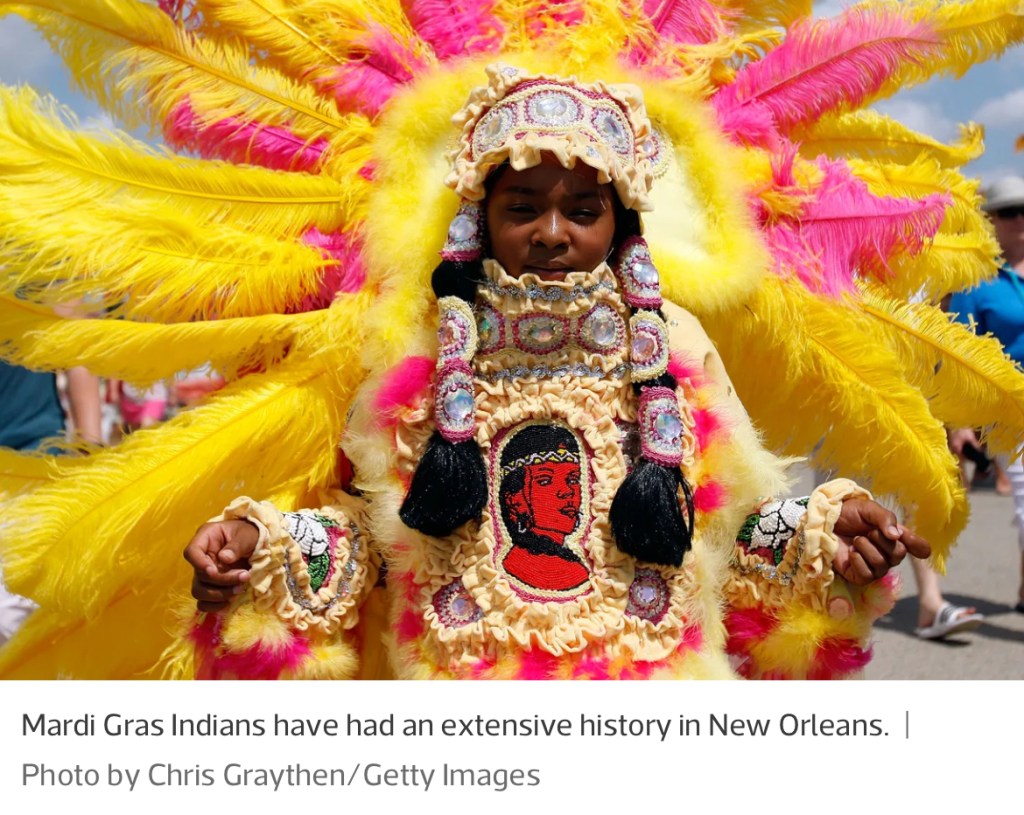
New Orleans, a city deeply rooted in history and culture, carries within its streets and bayous the stories of indigenous Black tribes who have played a profound role in shaping its identity. These tribes, often overlooked in mainstream narratives, offer a rich tapestry of cultural heritage that merges African, Native American, and Creole traditions. Through resilience, creativity, and deep spiritual connections, these tribes have maintained their unique identities despite centuries of colonialism and marginalization.
Historical Roots
The origins of the indigenous Black tribes of New Orleans can be traced back to the intersection of African and Native American cultures during the colonial era. Africans brought to Louisiana as enslaved people encountered Native American tribes such as the Choctaw, Natchez, Houma, and Chitimacha. Over time, these two groups formed alliances, intermarried, and developed communities that combined their traditions, languages, and spiritual beliefs.
However, there is some evidence suggesting that Black natives may have been present in the Americas even before the arrival of European colonizers and the transatlantic slave trade. Scholars such as Ivan Van Sertima, in his work They Came Before Columbus, argue that African explorers and traders traveled to the Americas long before Columbus. These explorers, including sailors from West African civilizations like the Mali Empire, may have made contact with indigenous peoples in the Americas, resulting in a pre-colonial presence of African-descended individuals.
Additionally, carvings and artifacts, such as the Olmec heads found in Central America, have sparked debates among historians and archaeologists regarding the possibility of early African influences in the region. While this theory remains a topic of scholarly discussion, it opens the door to rethinking the narratives of Black presence in the Americas before European colonization.
As Native American tribes faced the pressures of displacement during the colonial era, many African people sought refuge among them, escaping slavery and forming bonds that would last for generations. The blending of cultures produced a new kind of community—one that retained its connection to the land while embracing African spiritual practices, music, and art.
The Mardi Gras Indians
One of the most visible manifestations of this cultural fusion is the Mardi Gras Indians. These indigenous Black tribes, who appear during the annual Mardi Gras celebrations, are renowned for their elaborate costumes, often adorned with feathers, beads, and intricate designs that pay homage to Native American culture. The tradition of masking as Indians dates back to the 18th century, when African slaves and freedmen would disguise themselves as Native Americans to evade capture or assert their defiance.
Mardi Gras Indian tribes, such as the Wild Magnolias, Yellow Pocahontas, and Creole Osceolas, each carry their unique histories, passed down through generations. These tribes have a hierarchical structure, with chiefs, queens, flag boys, and other roles that reflect both African and Native American leadership traditions. The “masking” tradition is not just about celebration—it is a form of spiritual resistance and cultural preservation.
The chants, rhythms, and dances performed by these tribes are deeply connected to African and indigenous spiritual traditions. Songs like “Indian Red” and “Shoo Fly” carry echoes of ancestral prayers, while the parading and costuming symbolize a reclamation of identity and honor for both African and Native ancestors.
Cultural Preservation and Spirituality
The spiritual traditions of the indigenous Black tribes of New Orleans are as diverse as their cultural backgrounds. Voodoo, a syncretic religion combining African, Catholic, and Native American elements, plays a significant role in many of these communities. Voodoo ceremonies, often led by priestesses and priests known as mambo and houngan, incorporate drumming, dancing, and chanting—practices rooted in both African and Native spiritual traditions.
At the heart of Voodoo is a deep connection to the ancestors and the natural world. Indigenous Black tribes view nature—especially the waters of the Mississippi River and the surrounding bayous—as sacred, drawing upon Native American beliefs that see the land as living and imbued with spirit. This belief system reflects a shared understanding of the interdependence between humanity and the environment, a view held by both African and Native peoples.
In addition to Voodoo, many indigenous Black tribes practice a blend of Christianity and African spirituality, a testament to their ability to adapt and maintain cultural continuity in the face of forced assimilation. Churches often serve as centers of community, where spiritual traditions are practiced and preserved through rituals, song, and dance.
Contemporary Struggles and Resilience
The indigenous Black tribes of New Orleans have faced considerable challenges over the centuries, from colonization and slavery to the devastation of Hurricane Katrina. Yet, through it all, they have remained resilient, preserving their culture and passing it on to future generations. In recent years, there has been a resurgence of interest in these tribes’ histories and traditions, as younger generations seek to reconnect with their roots.
Efforts are being made to document and preserve the cultural practices of the Mardi Gras Indians and other indigenous Black tribes through oral histories, art exhibitions, and academic research. Community leaders are working to ensure that their stories are included in the broader narrative of New Orleans’ history, advocating for greater recognition and respect for the contributions of indigenous Black tribes to the city’s culture and identity.
Conclusion
The indigenous Black tribes of New Orleans represent a powerful symbol of cultural resilience, blending African and Native American traditions to create a vibrant and unique identity. Through the Mardi Gras Indians, Voodoo spirituality, and other cultural practices, these tribes have maintained their connection to their ancestors and the land. Their stories are an essential part of the rich tapestry of New Orleans, and their legacy continues to inspire and uplift the next generation.
As we honor these tribes, we recognize their enduring spirit and the importance of preserving their cultural heritage. In doing so, we ensure that the voices of the indigenous Black tribes of New Orleans continue to be heard, celebrated, and respected for generations to come.
Sources:
- Bell, Caryn Cossé. Revolution, Romanticism, and the Afro-Creole Protest Tradition in Louisiana 1718-1868. Louisiana State University Press, 1997.
- Gill, Aisha. “Mardi Gras Indians: The Spirit of a People.” Louisiana Folklore Journal, 2003.
- Long, Carolyn Morrow. Spiritual Merchants: Religion, Magic, and Commerce. University of Tennessee Press, 2001.

 Livity Blog